

Growing Up with Technology: Helping Children Think Critically in a Digital World
Classroom activities in 30 European schools, including a school in the Patras area, explored how to help students think critically about the digital world.
Διαβάστε την ελληνική έκδοση αυτού του άρθρου.

A child can navigate a smartphone with ease and still struggle to recognise misleading information. A teenager can use artificial intelligence to answer a question without knowing whether the answer is reliable. Being comfortable with technology does not automatically mean understanding it.
For parents and teachers, this raises a practical question: how can schools help children make informed decisions in a world of social media, algorithms and AI?
Part of the answer lies in what happens in the classroom. Checking the source of an online claim, discussing what is safe to share, creating a digital story or examining an AI-generated answer can turn familiar technology into an opportunity to learn. Alongside technical knowledge, students need opportunities to practice judgement, ask questions and consider how their online actions affect others.
This approach was put into practice through classroom pilots involving 757 students and 46 teachers in 30 schools across 10 European countries. Activities connected informatics with situations students could recognise from their own lives, through discussion, teamwork, creative tasks and problem-solving.
Online communication and AI in a Greek classroom
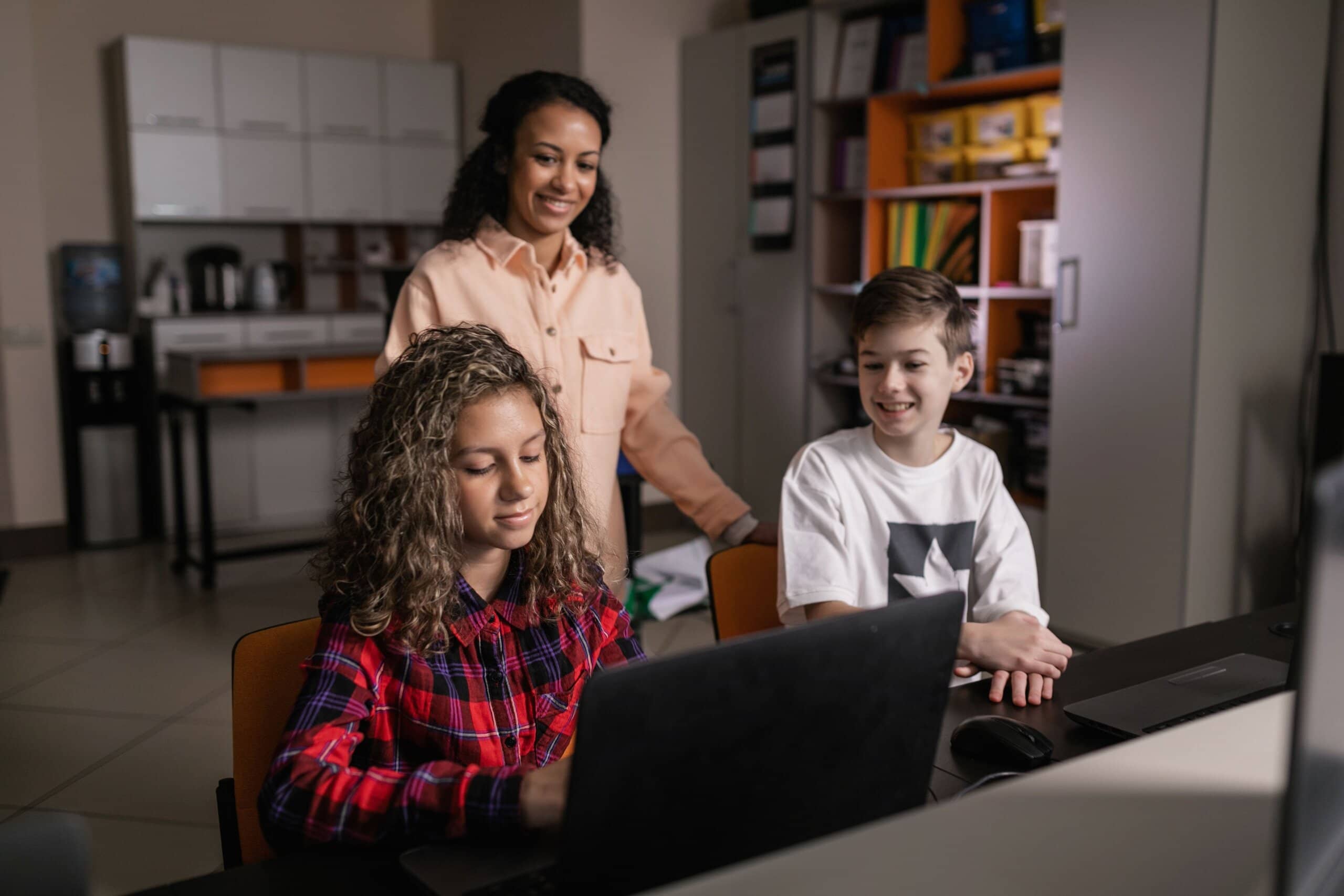
In Greece, 20 students at the High School of Kato Kastritsi Patras took part in activities on online communication and artificial intelligence.
Through classroom examples, small-group tasks and guided discussion, they explored how to communicate respectfully online, protect their personal data and collaborate responsibly in digital environments. They also examined everyday uses of AI, including questions about the reliability of its answers, potential bias and responsible use.
The emphasis was on giving students space to examine their choices: how they communicate online, how they judge information and when they should question a digital tool’s output.
During the Greek pilot, students showed curiosity and participated actively in discussions about artificial intelligence, while also reflecting on their online behaviour. Students also gave positive feedback on their learning experience. Teachers highlighted the need to adapt examples and guidance to different ages and levels of experience.
What makes these activities work?
Across the participating countries, classroom reports frequently highlighted student interest when activities involved making something, working together or addressing a recognizable problem. Programming, digital games, source-checking and creative production provided different ways to connect learning with practical experience.
The pilots also revealed the demands placed on teachers. Limited lesson time, uneven access to equipment and differences in students’ prior knowledge affected what could be achieved. Some activities needed simpler instructions, smaller steps or additional preparation.
The evaluation reported generally positive student experiences and encouraging signs in selected self-reported digital uses. These findings provide a basis for further development and testing, while longer-term changes in skills require further study.
For schools, a practical lesson is that meaningful digital education needs time, suitable activities and teachers who have the support to guide students through them.
The initiative behind the classroom activities
The research, teacher training and school pilots form part of DIGITAL FIRST, a European cooperation initiative focusing on informatics education in primary and secondary schools. Project Lighthouse represents Greece in this partnership, which brings together 15 organisations from 10 countries with funding from the European Union’s Erasmus+ programme.
Research that took place through this project gathered survey responses from 1,017 teachers, alongside focus groups with teachers and students. Its findings informed the development of training and classroom materials designed to make digital learning more practical and relevant to young people’s lives.
Educators, parents and interested readers can visit digitalfirstnetwork.eu to explore classroom resources, short educational videos, podcasts and recorded webinars, alongside research findings and examples from schools across Europe.

Funded by the European Union. Views and opinions expressed are however those of the author(s) only and do not necessarily reflect those of the European Union or the European Education and Culture Executive Agency (EACEA). Neither the European Union nor EACEA can be held responsible for them.
Project number: 101132761