

PM AGORA 2026
Three days in Verona, one community of EU Project Managers
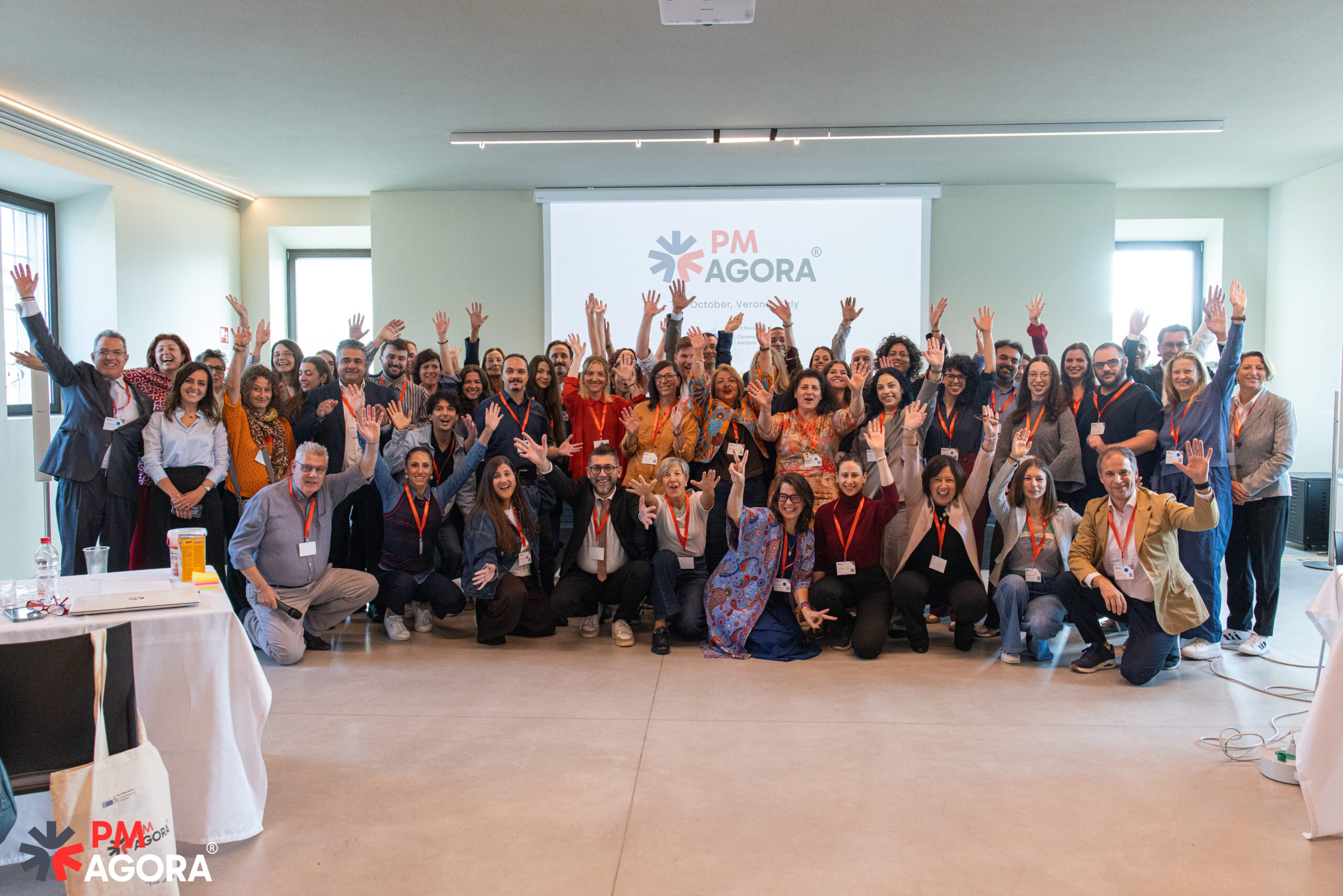
PM AGORA 2026 was the third edition of a meeting that has become a fixture in our calendar. Each year the community comes together again, grows a little, and changes alongside the profession of the EU Project Manager. The aim stays the same: a profession that is better defended, and kinder to the people who practise it. This year we gathered in Verona, over three days, to work on that together.
Prelude: Spritz & Sparks
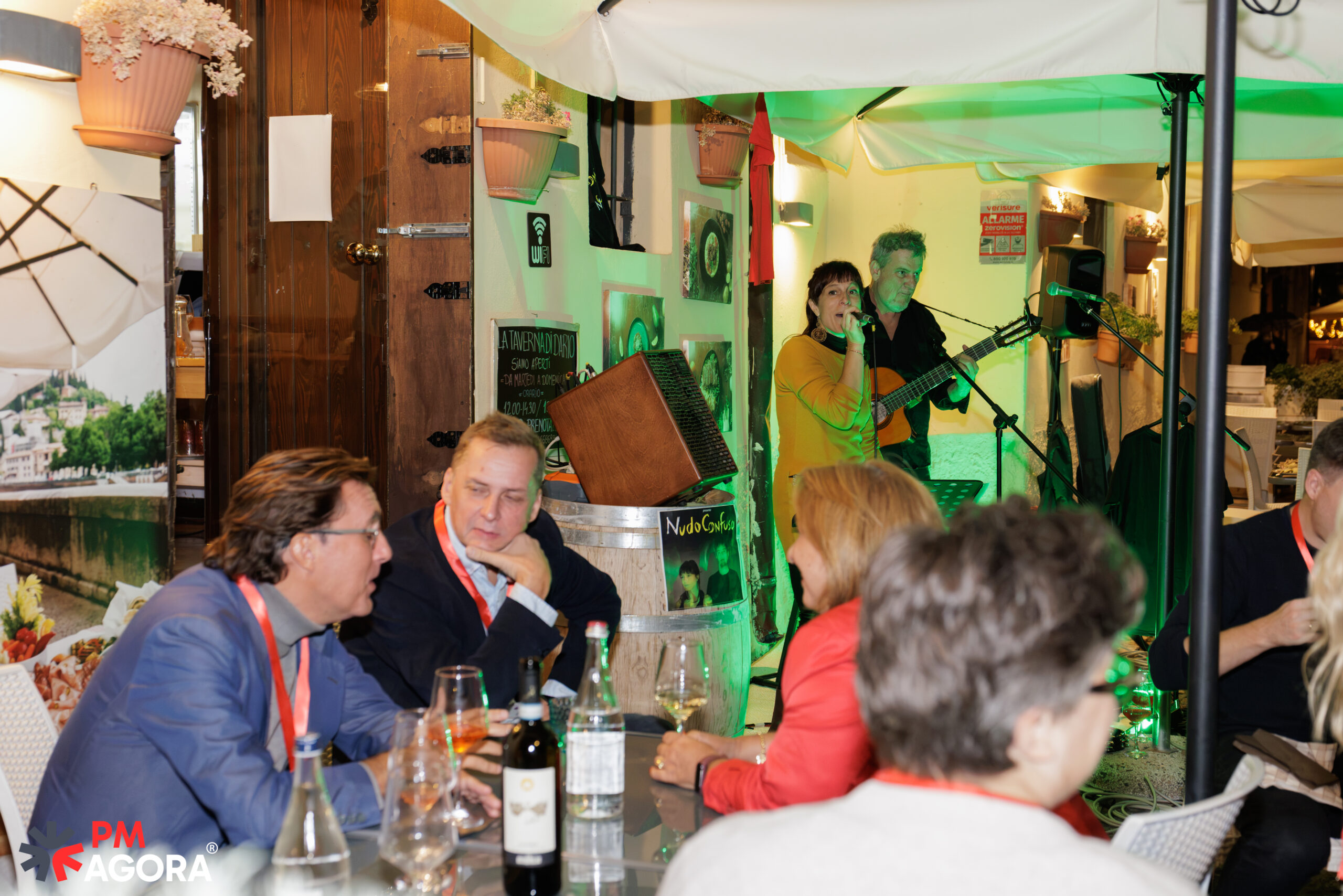
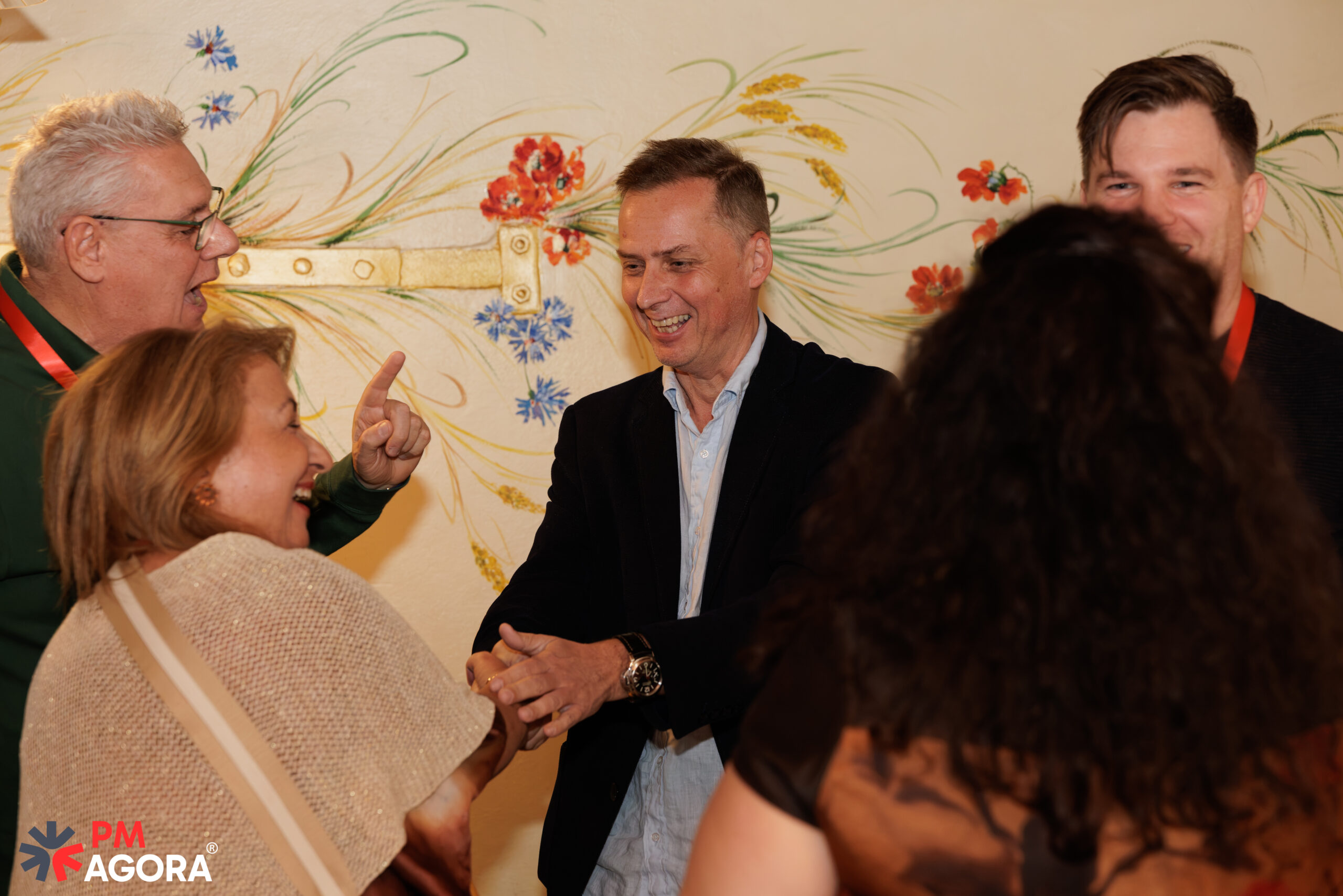
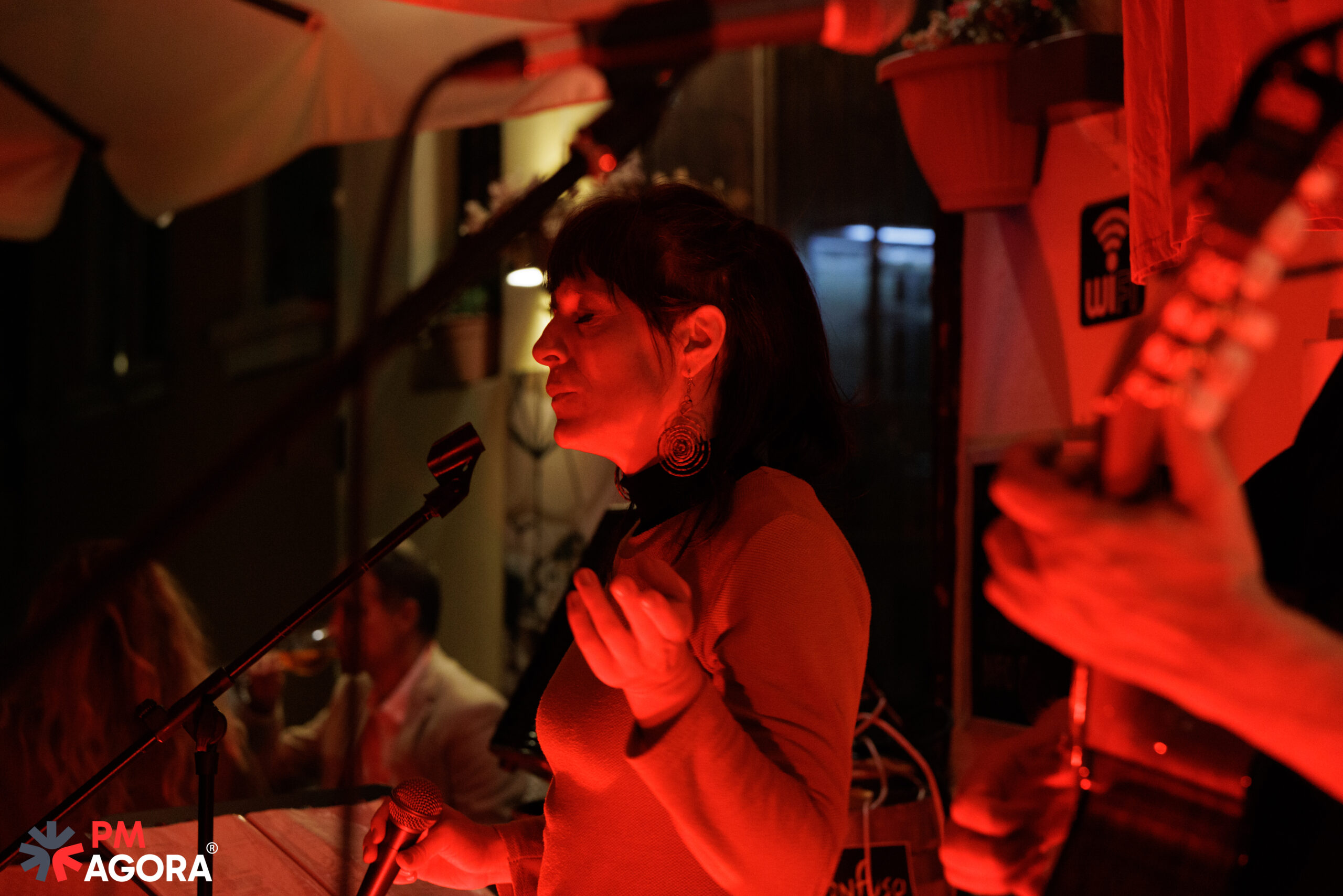
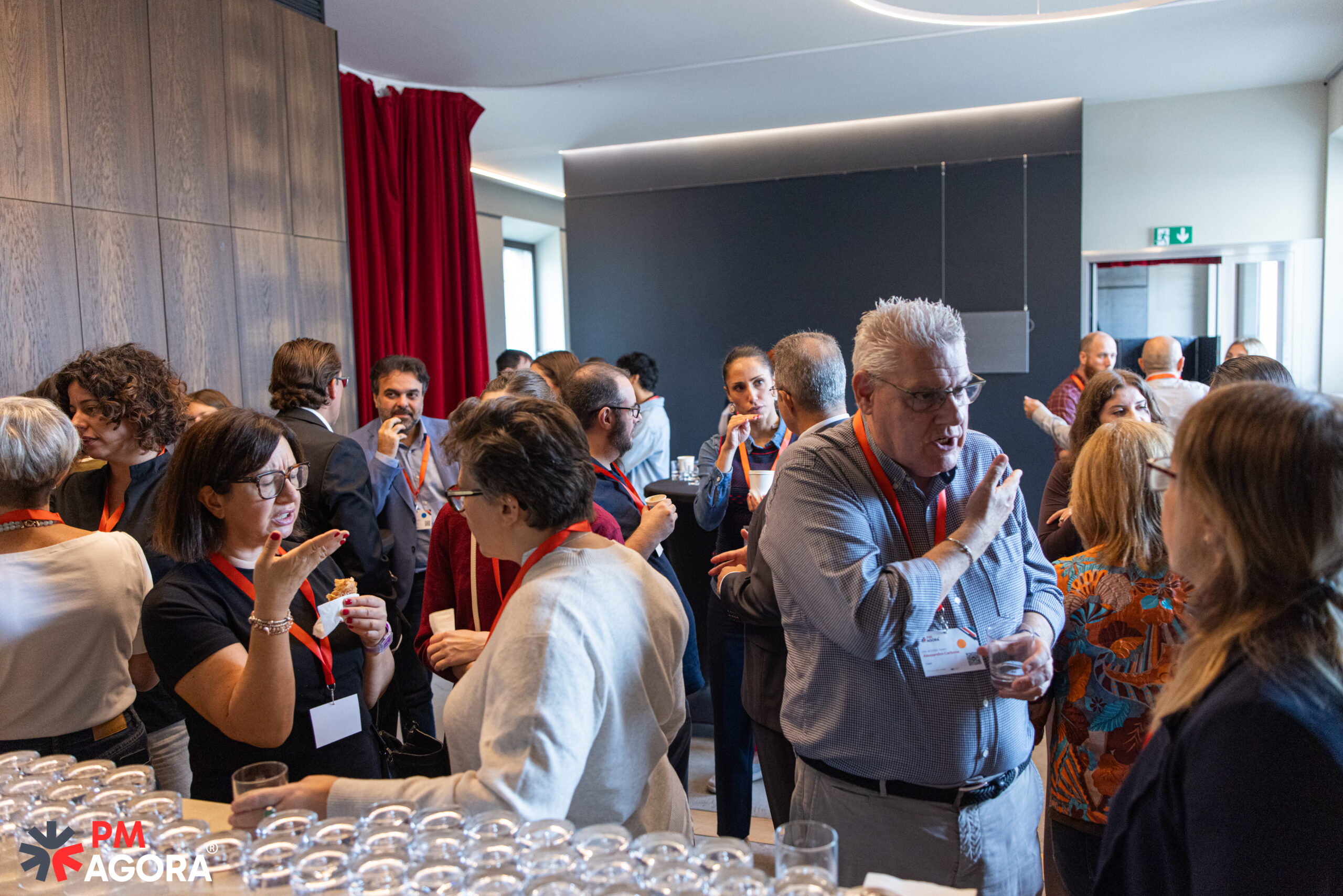
The Prelude took place on 7 October, the evening before the main programme. For many of us it was the first time in the same place: some were meeting again, others were meeting for the first time. We gathered at Tigella Bella, right by the river, and shared traditional dishes from the Veneto region. The music came from Nudo Confuso, who played for us through the evening. By the time the first sessions began the next morning, the room already felt familiar.
The opening: why we are here
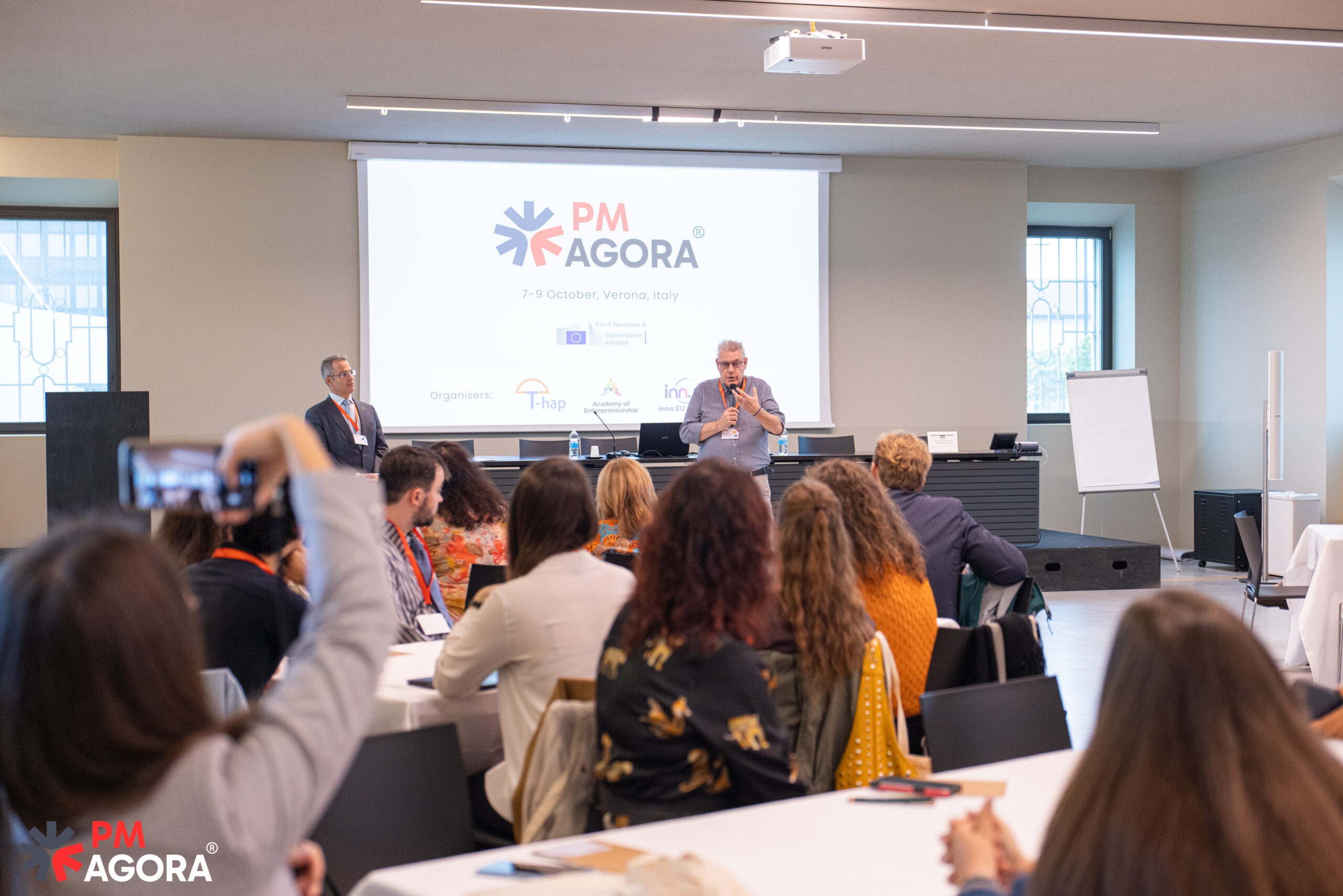
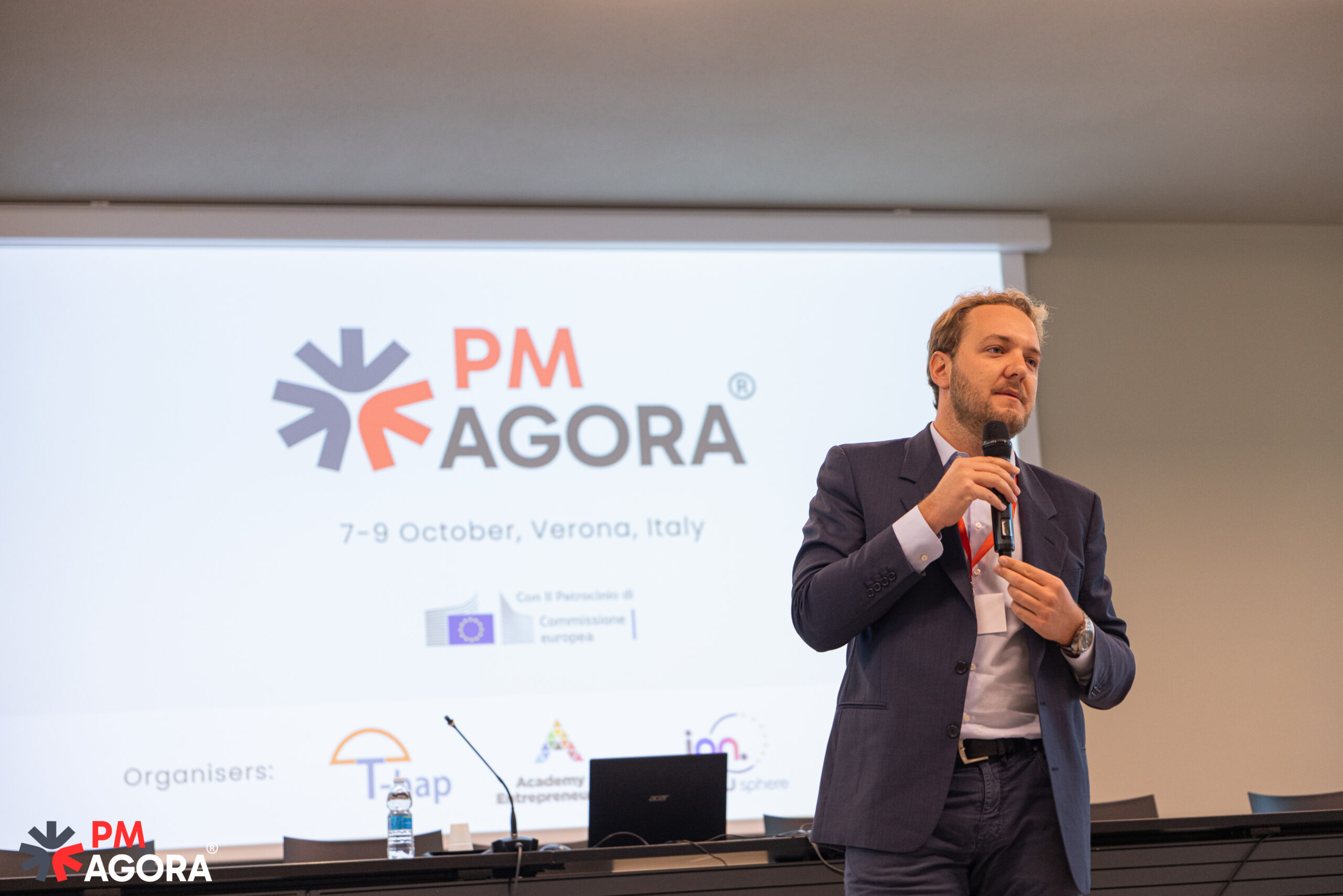
The main programme opened on 8 October at M15 Magazzini delle Professioni with a welcome from the co-organisers. They went back to the question behind PM AGORA since 2024, when three EU Project Managers asked for a shared space for the people who turn EU policies into projects on the ground. Why are we here? To get to know each other, to work together, to build new skills, and to make this profession as sustainable as we can, for ourselves and for the community that practises it.
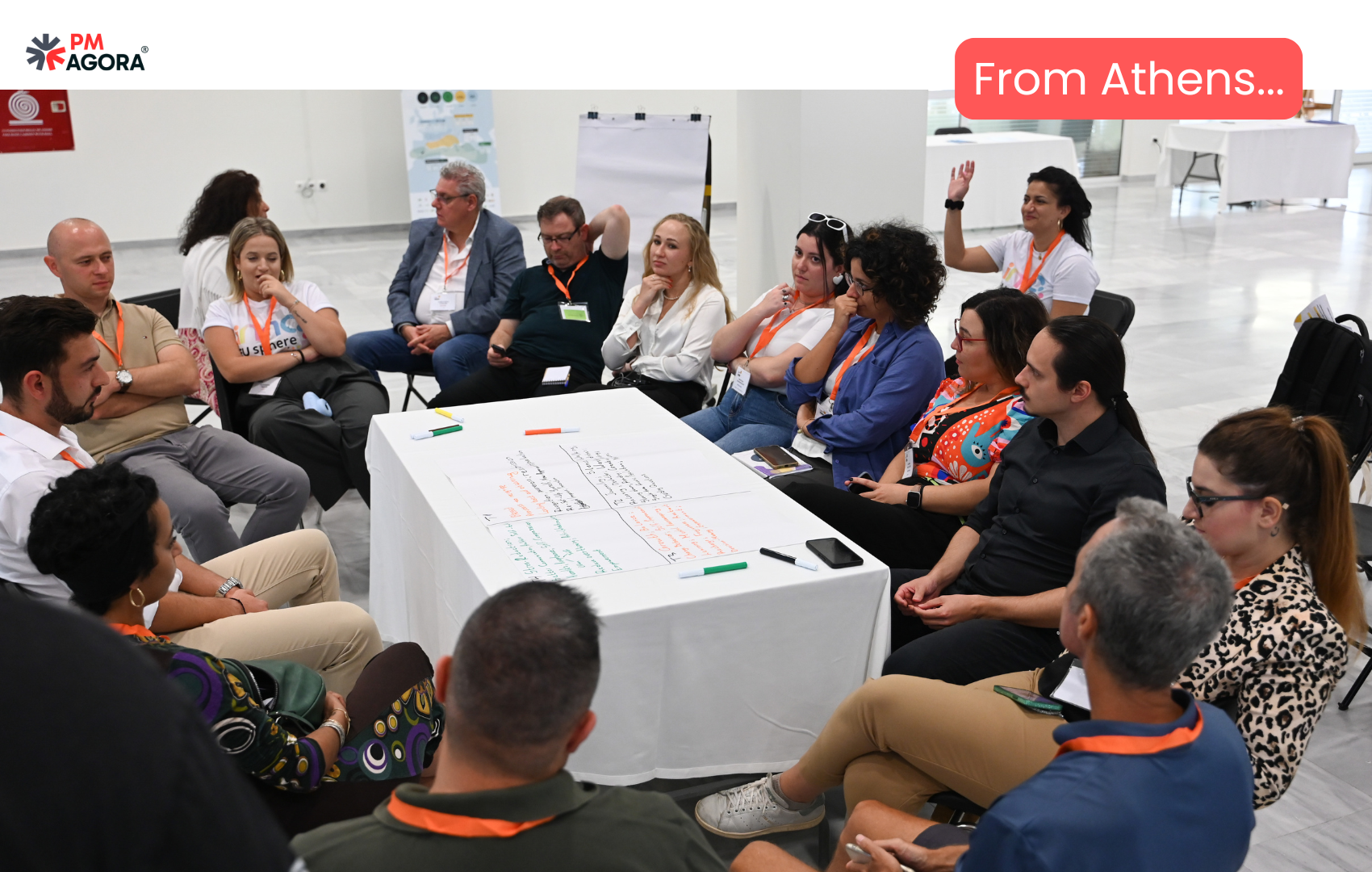
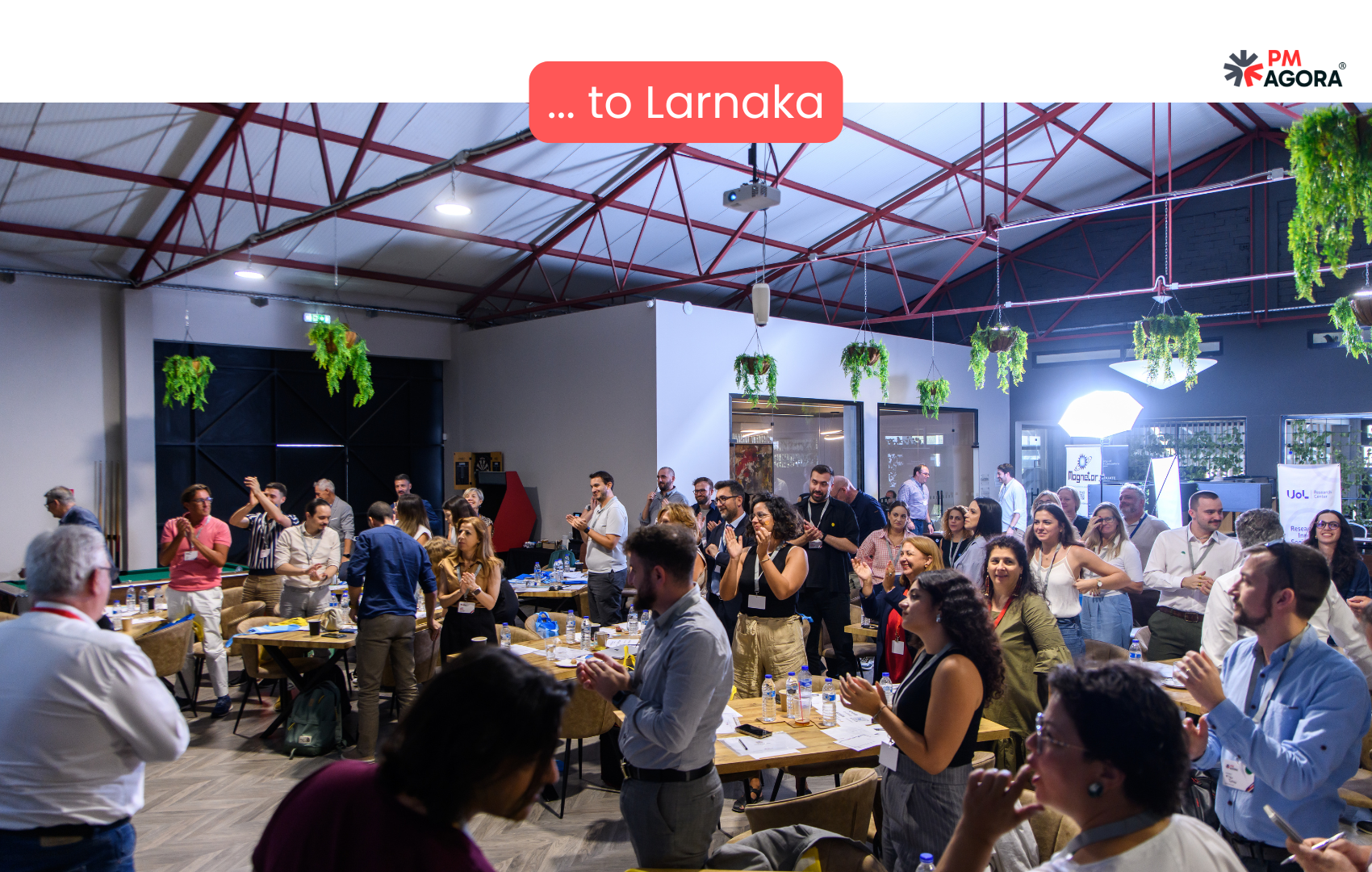
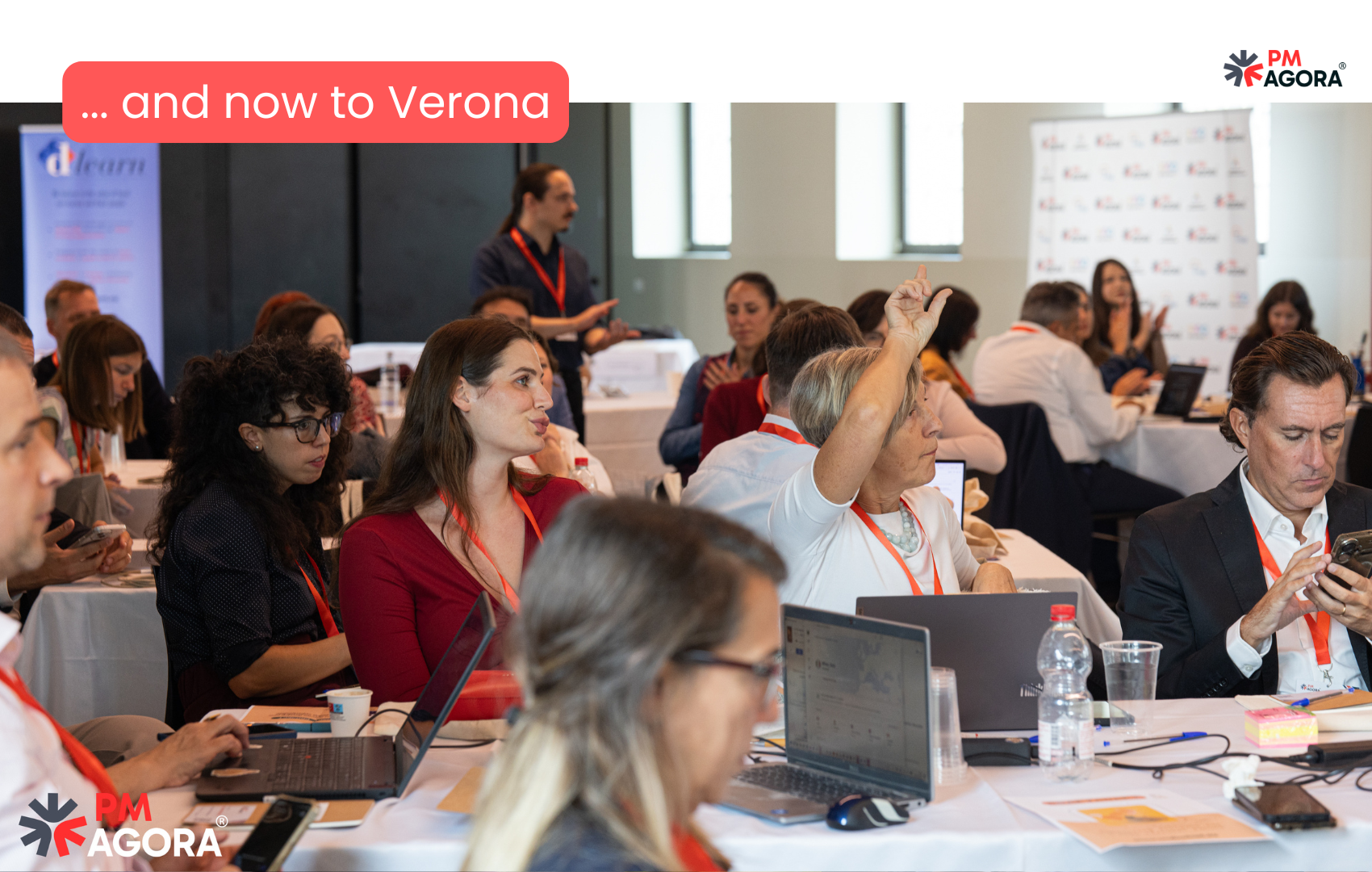
Giacomo Cona, City Councillor for European Policies of the Municipality of Verona, spoke next on behalf of the city. He explained what it means for Verona to host a gathering like this one. PM AGORA began under the auspices of the Municipality of Athens, moved to Cyprus, and this year found a home in Verona with the support of the city and the patronage of the European Commission.
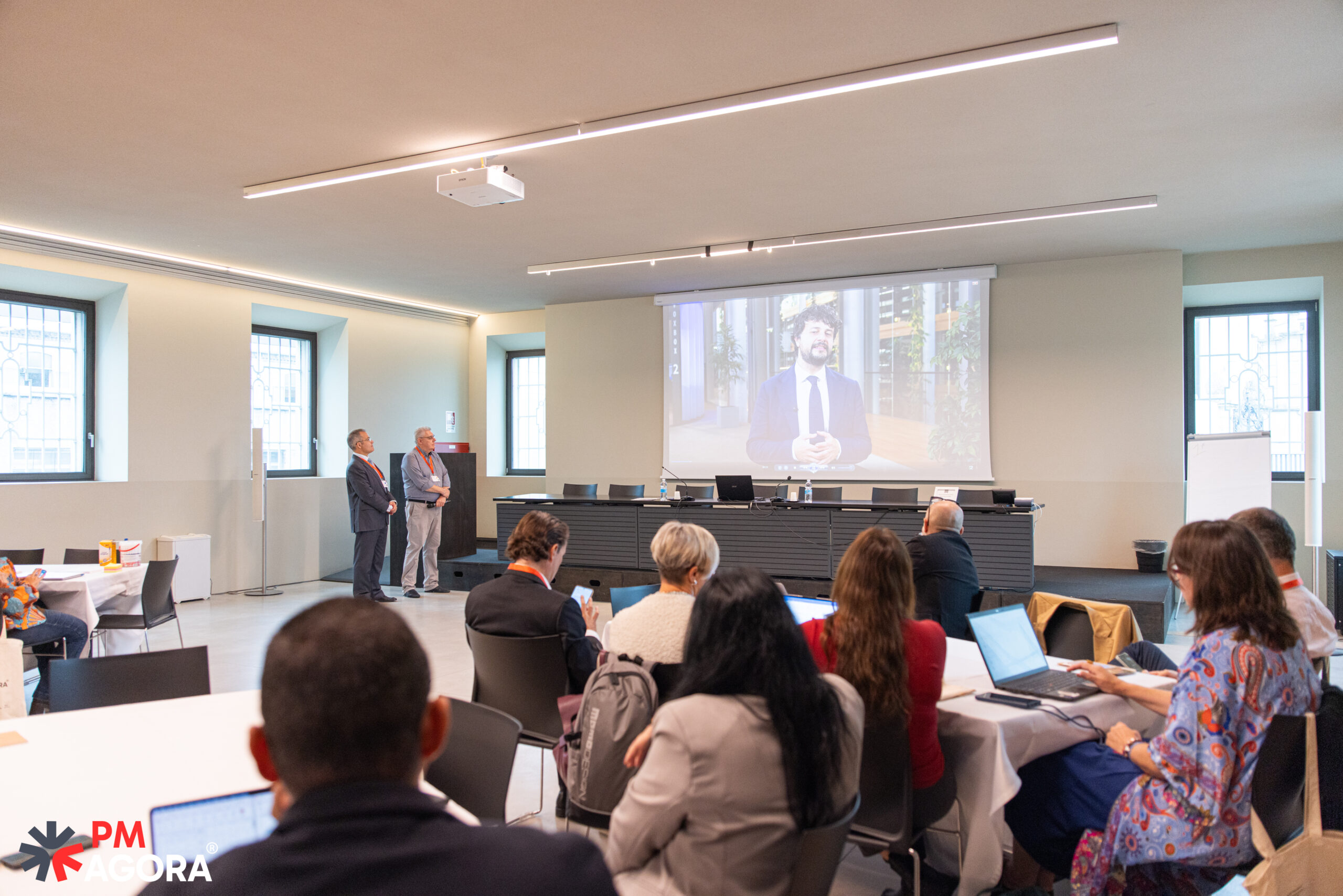
The opening continued with a video message from Brando Benifei, Member of the European Parliament. Speaking from the Parliament, he was open about the pressure the European Union is under. The climate crisis keeps growing and armed conflicts are reshaping the world around it, and the Union has to adapt to crises that do not stop coming concerning how Europe can come out of them stronger and not weaker.
For him, the answer starts with what Europe already stands for. To get through these crises, the Union has to protect its social model: peaceful relations between people, a fair distribution of resources, solidarity and inclusion. And that model is not kept alive in Brussels alone. EU Project Managers stand on the front line of this effort, because they are the ones who bring European policies to the ground, project by project. Their work is where the social model becomes real.
Wellbeing check-ins
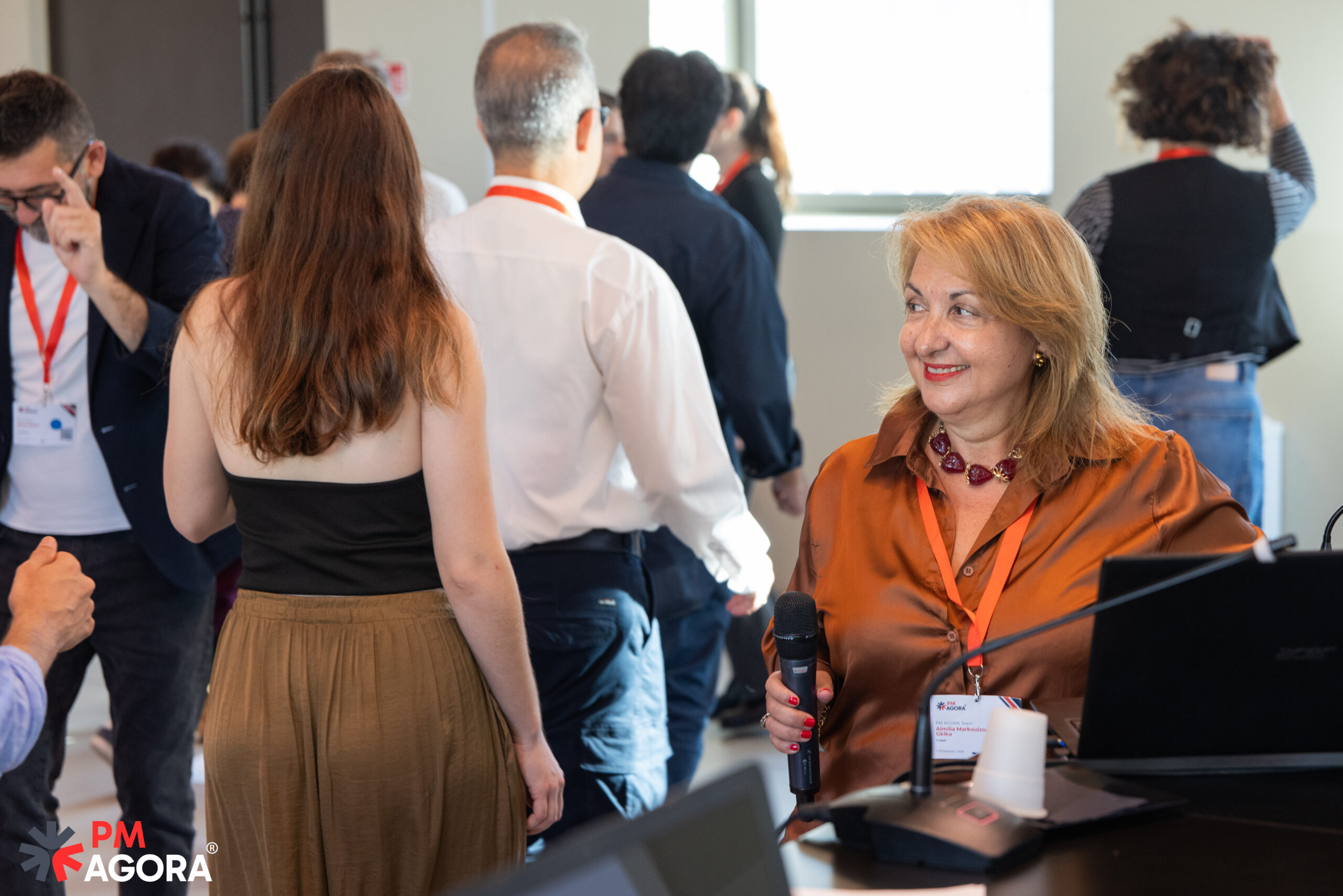
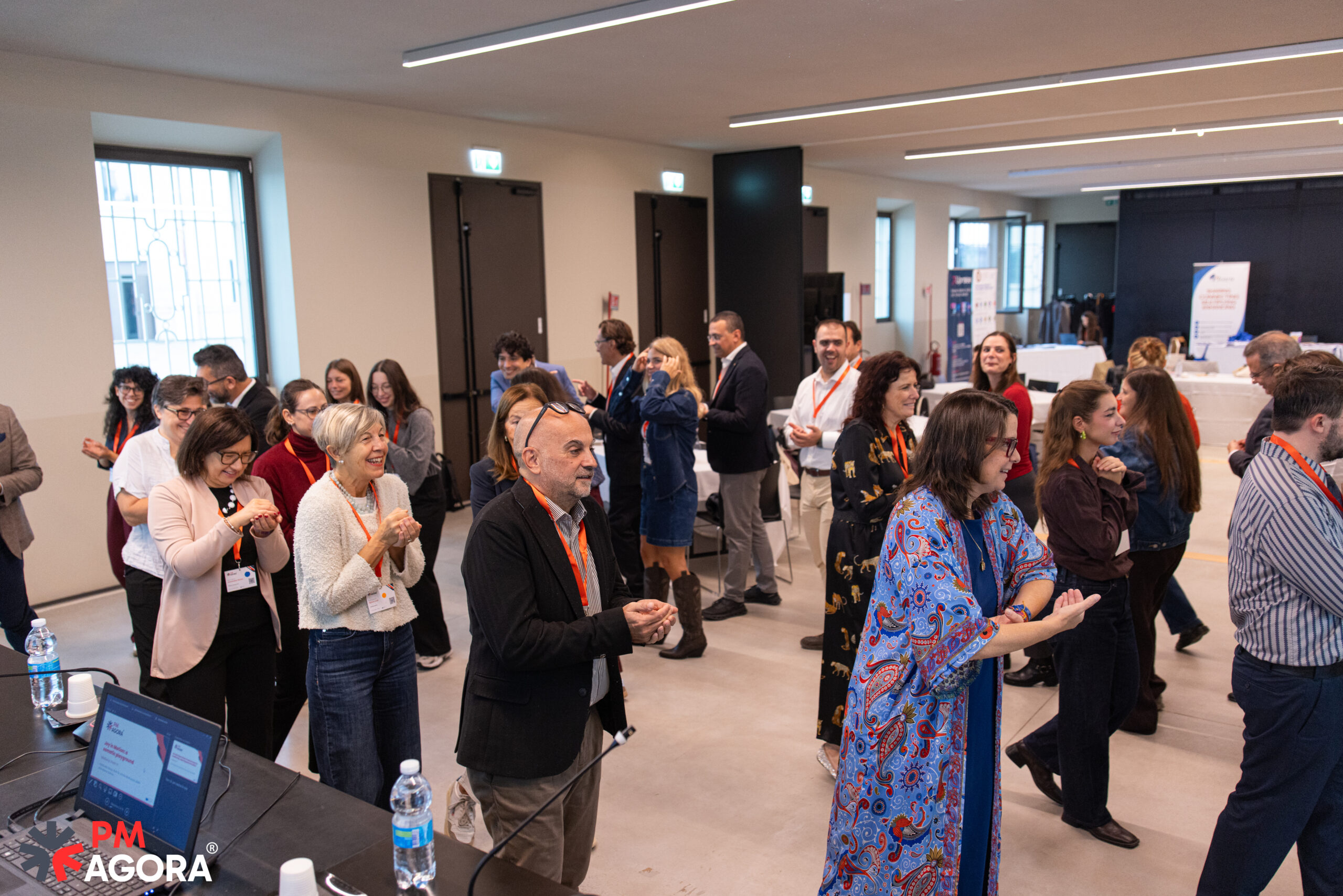
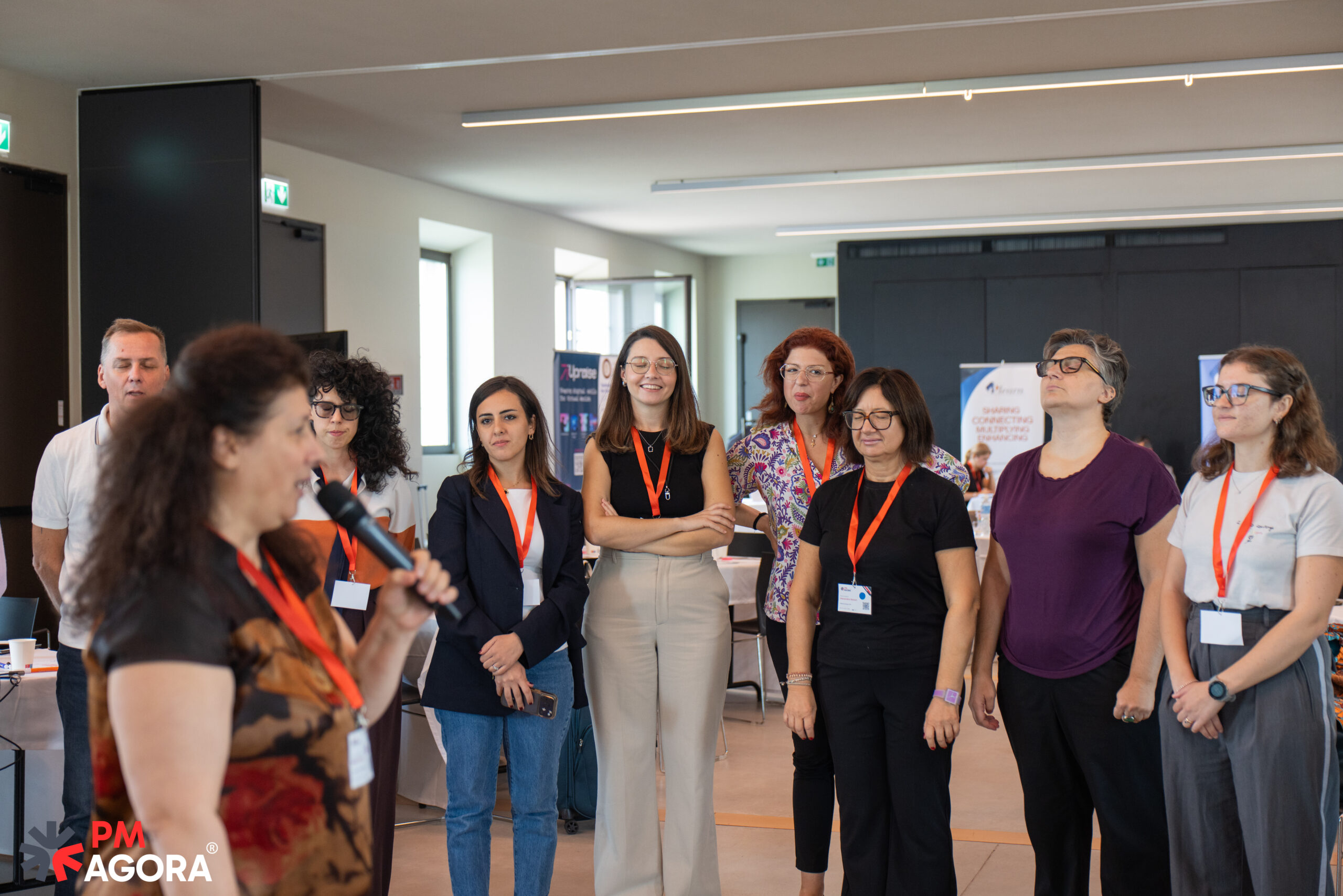
One thread ran through both days, the wellbeing check-ins led by Helena Stamou and Aimilia Markouizou Gkika. They were short breaks between the sessions, built to wake up the mind and the body and bring the two back in tune. After a few minutes of breathing, movement and attention, people returned to the room a little lighter. They also did something we had not planned for. They turned a room of individuals into a group, and by the second day people who had met only recently were greeting each other like colleagues.
AI in practice: saving time without losing quality
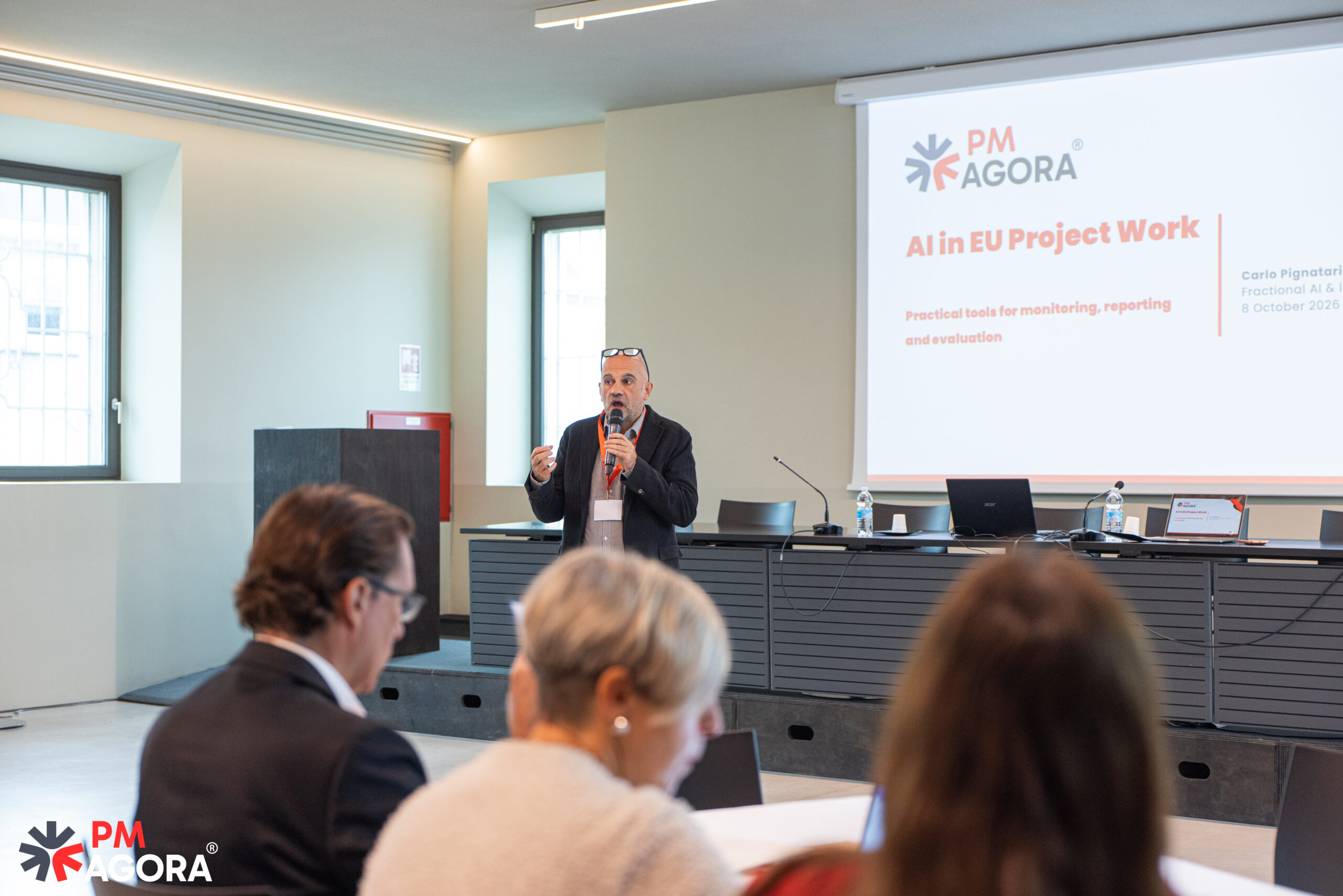
Carlo Pignatari ran two sessions on AI, with one aim: to show project managers how to use it in their daily work to save time and resources, without giving up quality. Carlo opened with a reminder that the computer was once a tool and never the job itself. The same goes for AI. The work of a project manager is still to ask the right next question, and AI can take over much of what surrounds it.
The first session looked at which tasks in EU project work can be automated, which tools suit which purpose, and how they can be combined in practical workflows. A point that came back several times was trust: a tool that describes something does not prove that it is true, so every output needs a source and a human check before it goes into a proposal or a report.
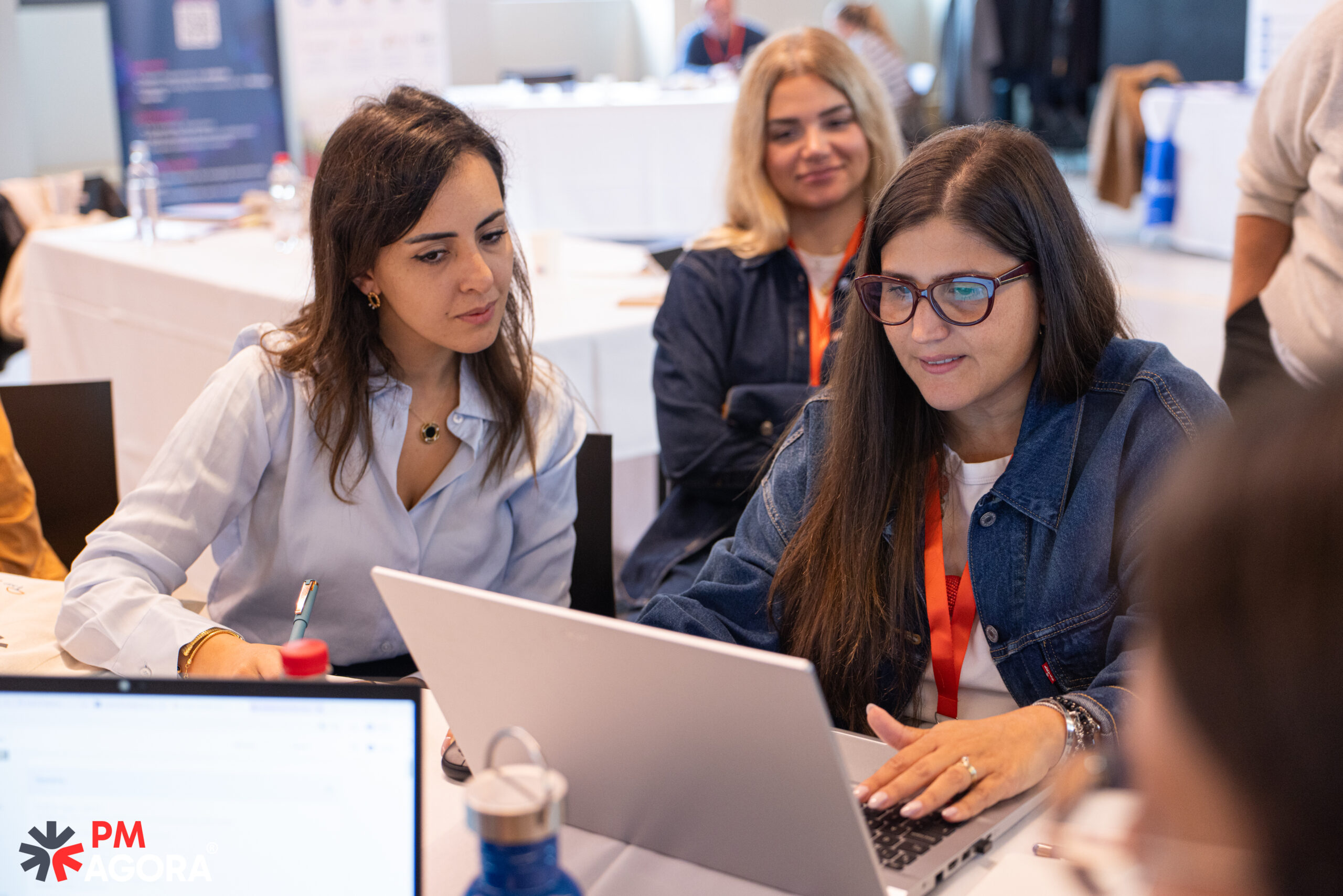
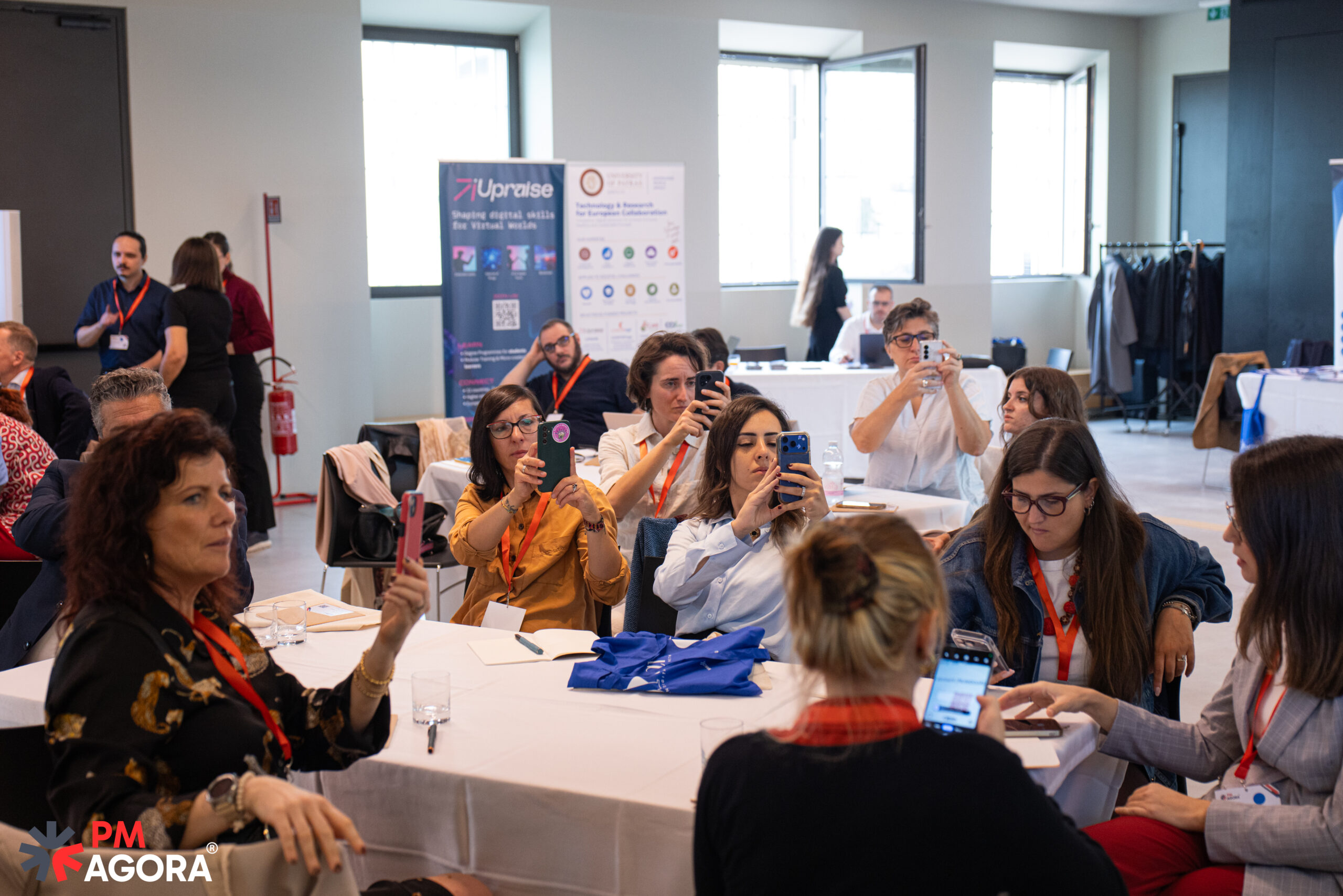
After the coffee break, participants put this into practice in a workshop. In groups, they worked on a realistic creative case, used AI tools to research, select sources and build a first draft, and then checked what was solid and what was still missing. Each group presented its work to the room. Many left with a method they could repeat on their next project, and a clearer sense of where AI helps and where the person still has to decide.
From projects to policy
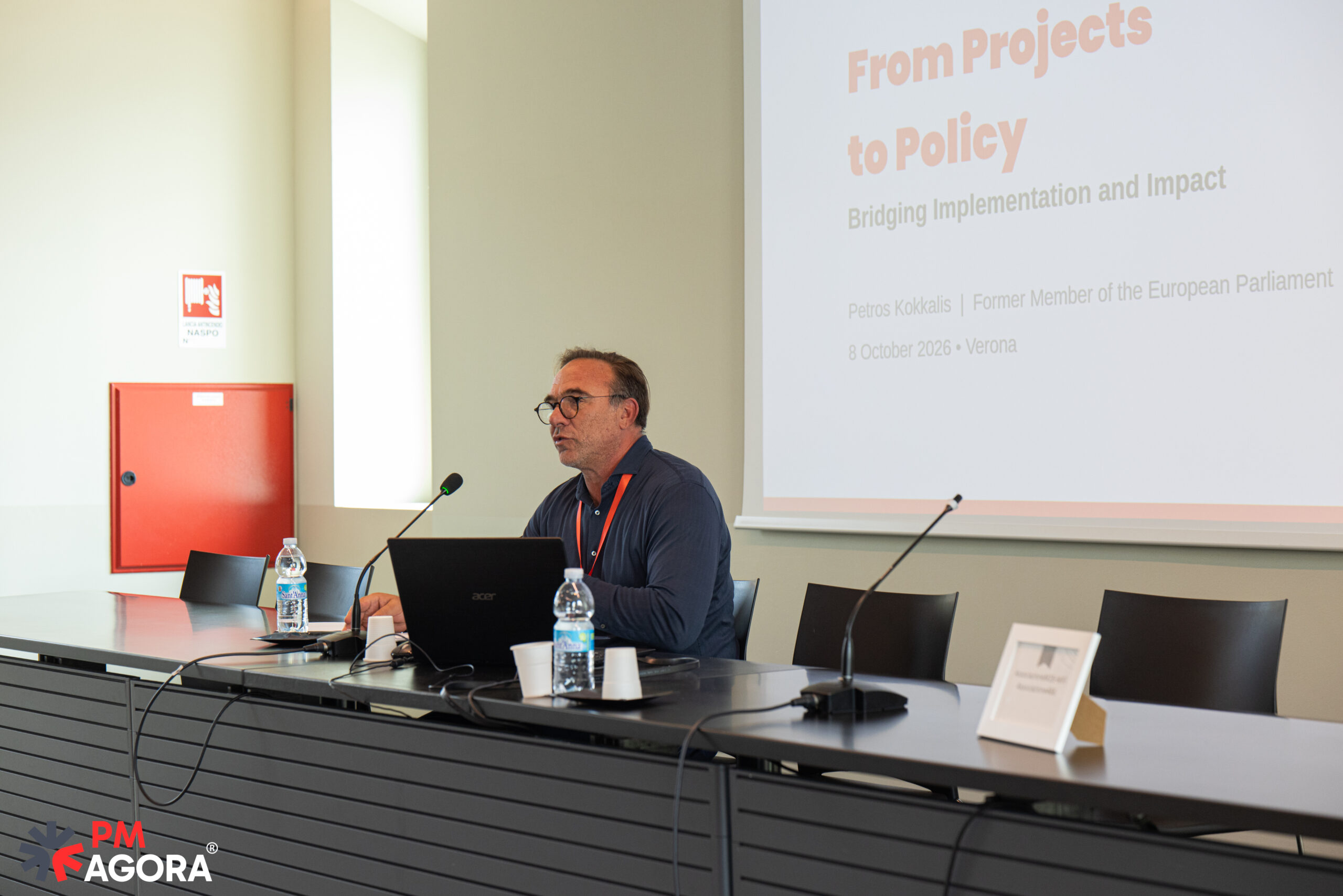
Petros Kokkalis, former Member of the European Parliament, took up a question many project managers know well. A project ends, the results are there and the lessons are learned, and then it is unclear who can take them further. Petros answered from the policy-maker’s side. Drawing on his experience as an MEP and as a local councillor working on entrepreneurship, he explained how an organisation can approach a policy-maker so that the results and lessons of a project become part of a programme that carries them forward.
His advice was practical. A result needs an owner, and evidence needs a route into a decision, so it helps to know which file or programme the decision sits in, who has the authority and when the next decision is due. A request is stronger when it names the decision it wants, brings the evidence together with its limits and asks for one defined next step.
Working across borders
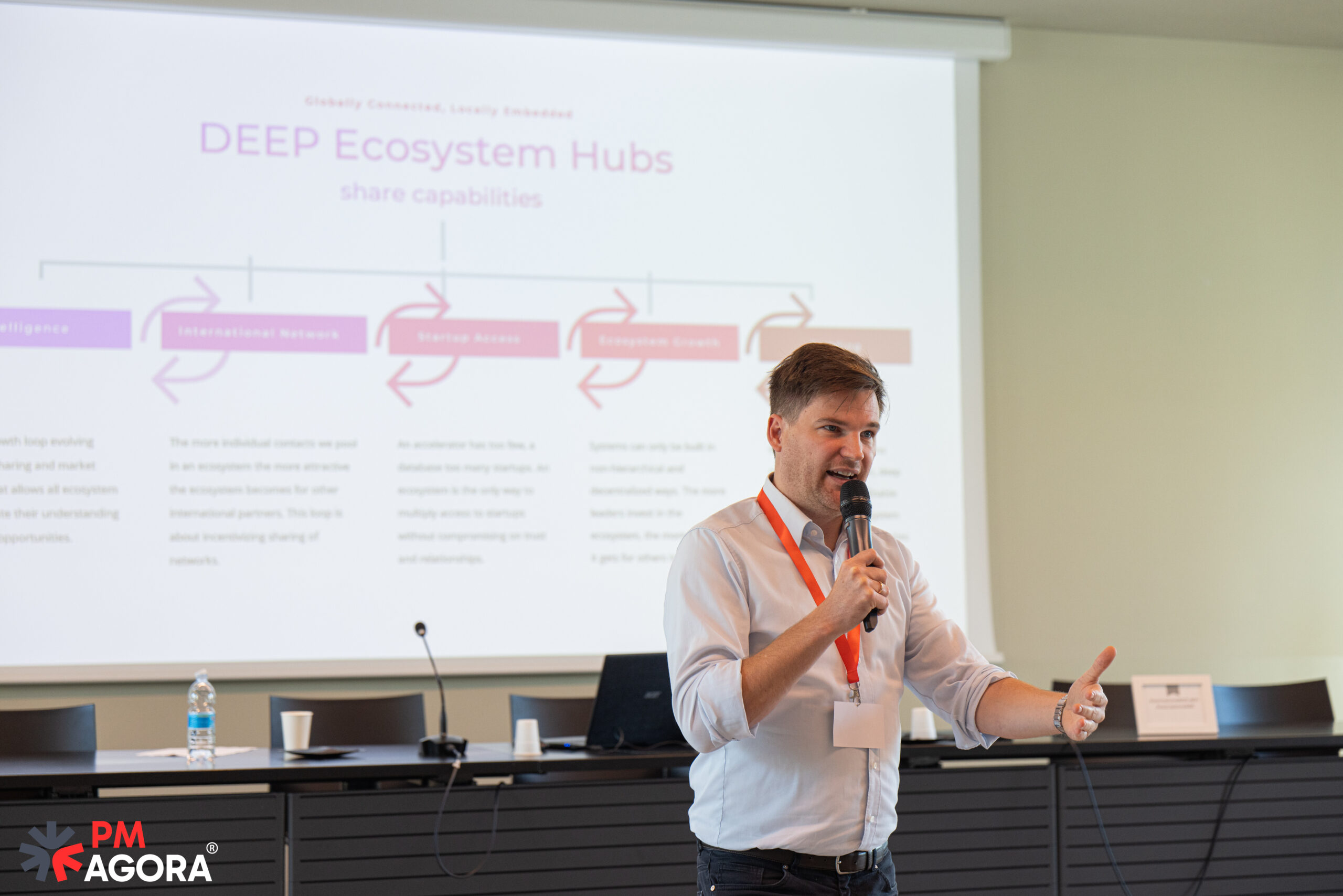
Thomas Kösters, Managing Director of DEEP Ecosystems, spoke about why networks matter in EU funding and how to build them on purpose. Networking events have a poor reputation, with the same faces and little follow-up, yet done well they can make the difference between a rejected proposal and a funded consortium. Thomas showed how to plan them like any other part of the work, by setting a goal before the event, reaching out to the right people in advance and following up quickly afterwards.
He then turned to the choice of partners. He encouraged participants to look for strategic partners with a shared vision, long-term commitment and stability, and to combine different kinds of organisations so that creativity and delivery balance each other. His last point was about getting value from relationships over time, by moving a contact step by step from a first meeting to a small joint activity and, in the end, a joint application. Funding follows trust and trust follows relationships, as his closing slide put it.
Stronger together
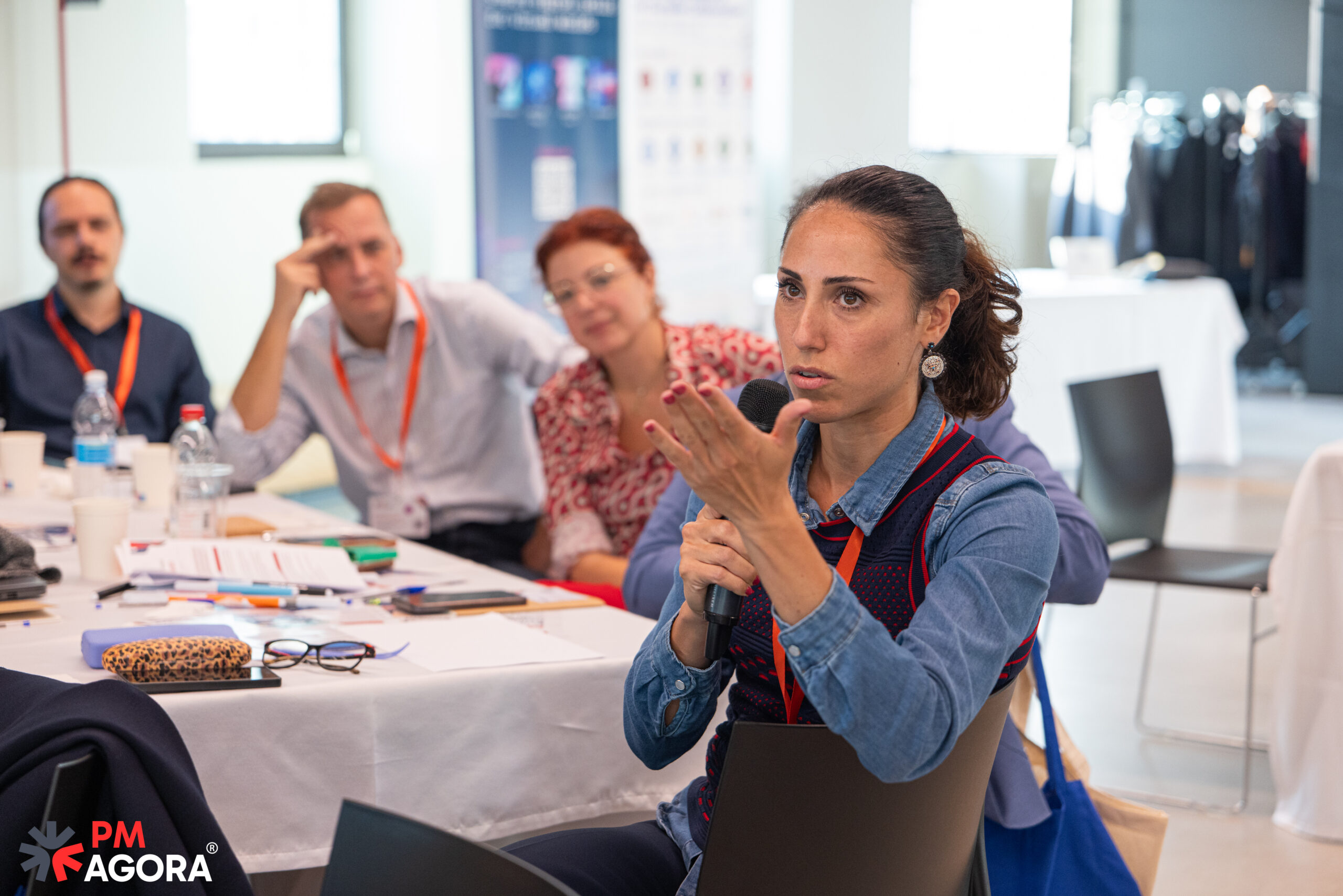
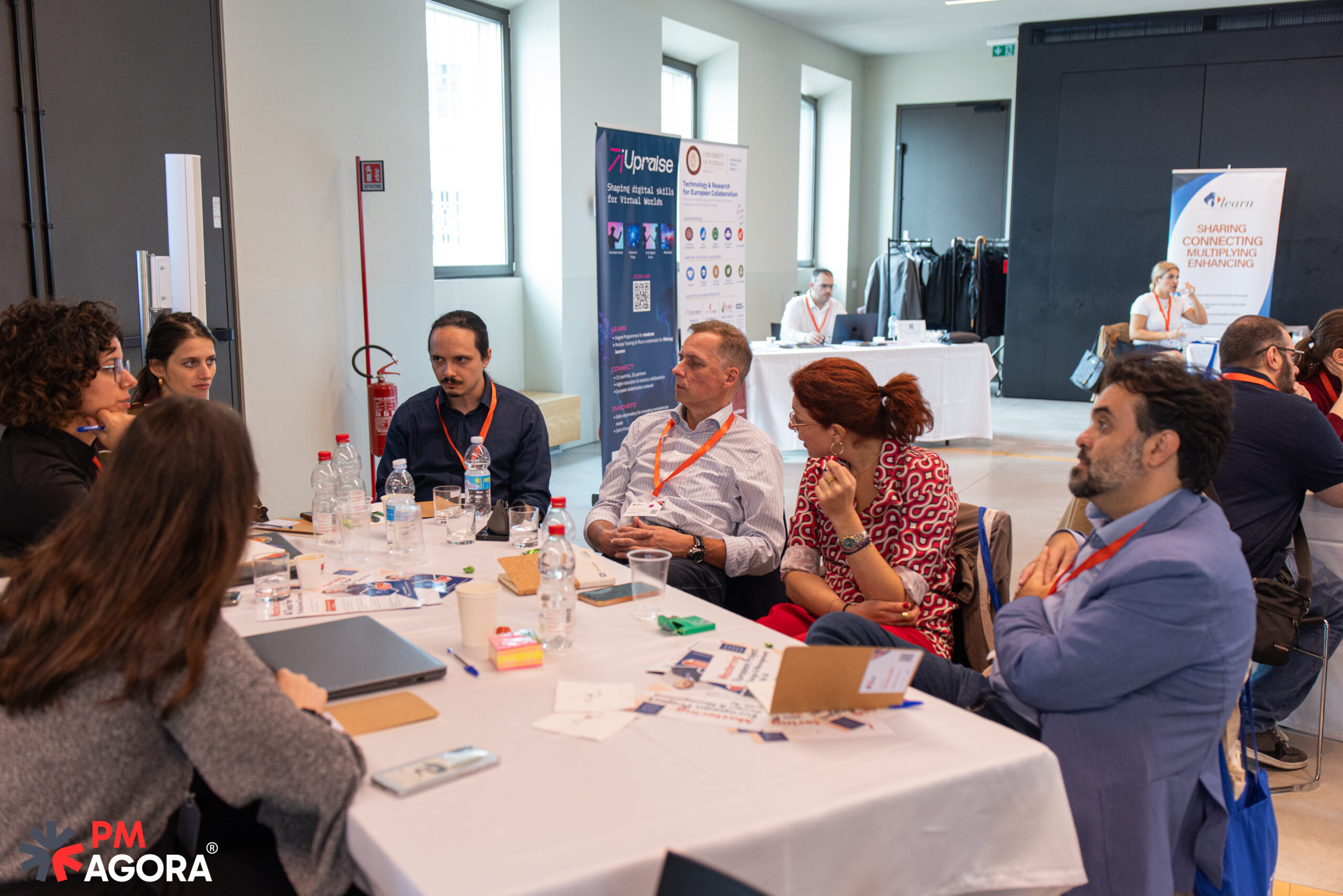
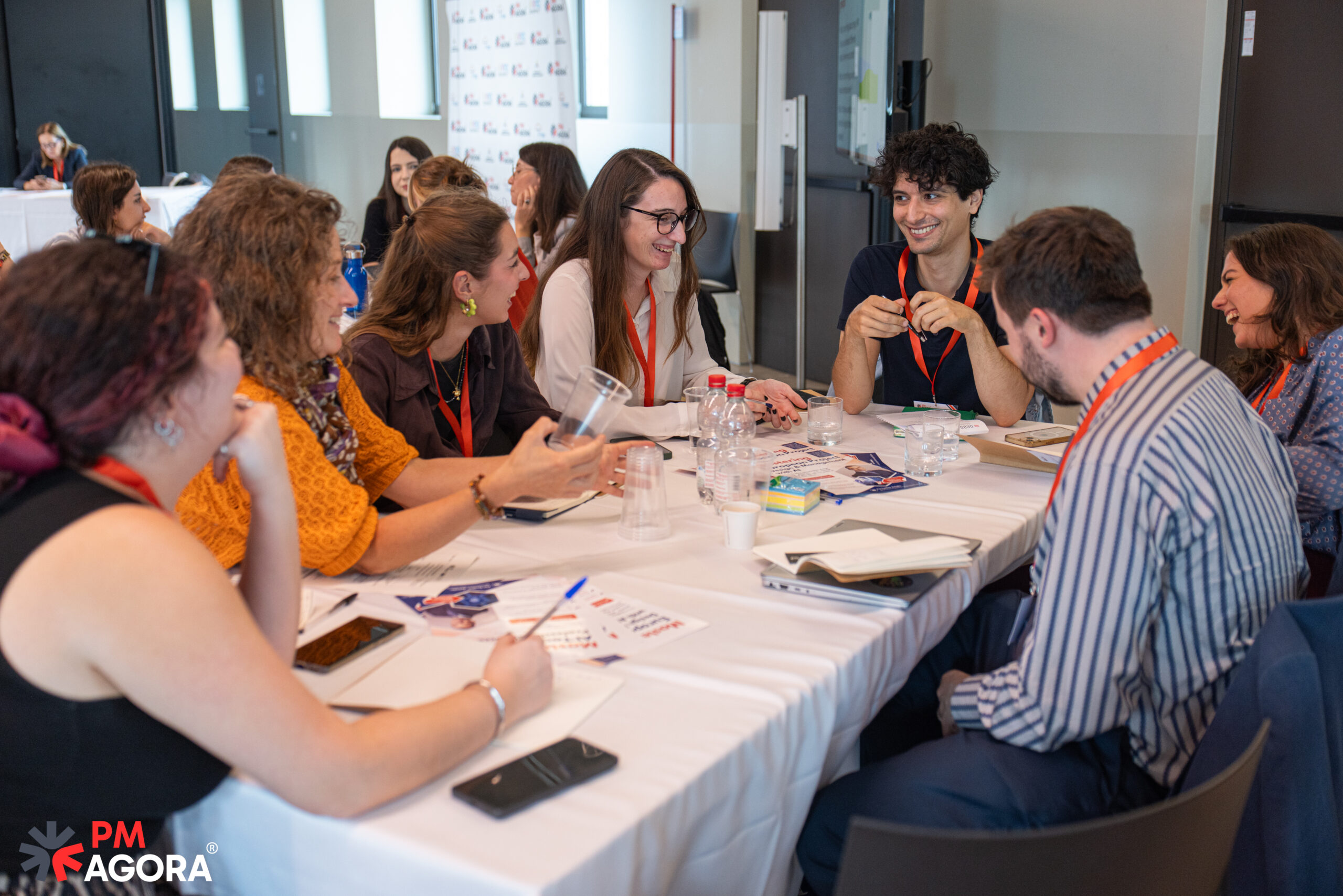
The afternoon was dedicated to the community. It opened with a peer learning lab led by Aimilia Markouizou Gkika, with a special place for junior project managers. Participants worked in groups and looked at project management as an experience we share, with its mistakes, frustrations and lessons. Senior colleagues brought experience and practical wisdom, and juniors brought fresh perspectives and the habit of questioning established ways. Learning from each other’s difficulties showed how much each generation has to offer the other.
This is us
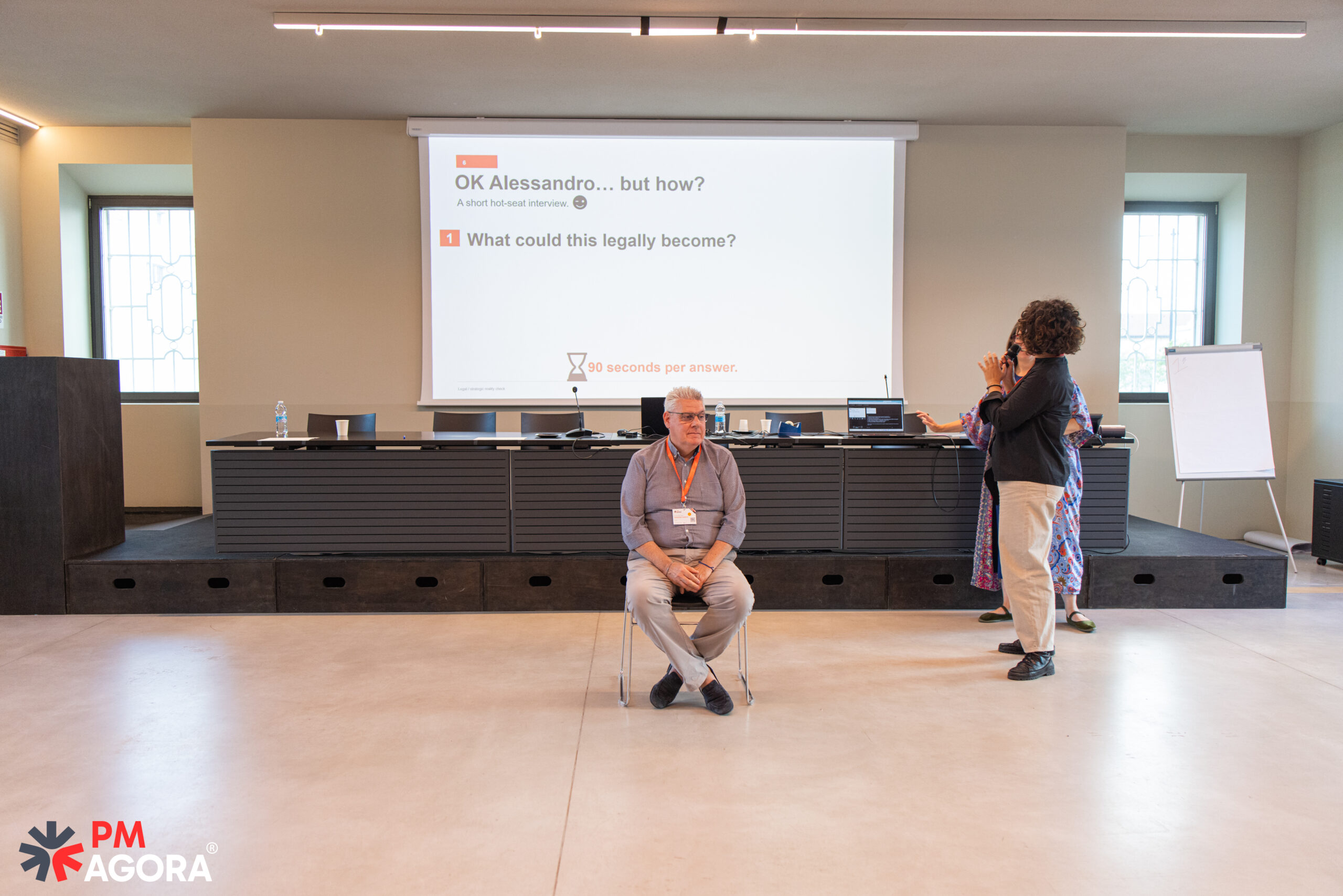
The afternoon closed with what may have been the biggest moment of this year’s PM AGORA. Konstantina Karameri, Marianella Parra and Alessandro Carbone started from a question that has followed the community since Athens. Europe dreams, sets priorities, creates programmes and invests, and then someone has to make it all happen.
So who speaks for the people who make European projects work?
That question grew after PM AGORA 2024, and in Larnaka in 2025 the first group stepped in. A year of co-creation followed, with a consultation among practitioners, a workplan, legal questions and a first draft of the EU Project Managers’ Manifesto. It describes EU Project Managers as the people on the ground who make Europe work, and asks for recognition of the profession, simpler rules, fair working conditions and wellbeing, and a seat at the table.
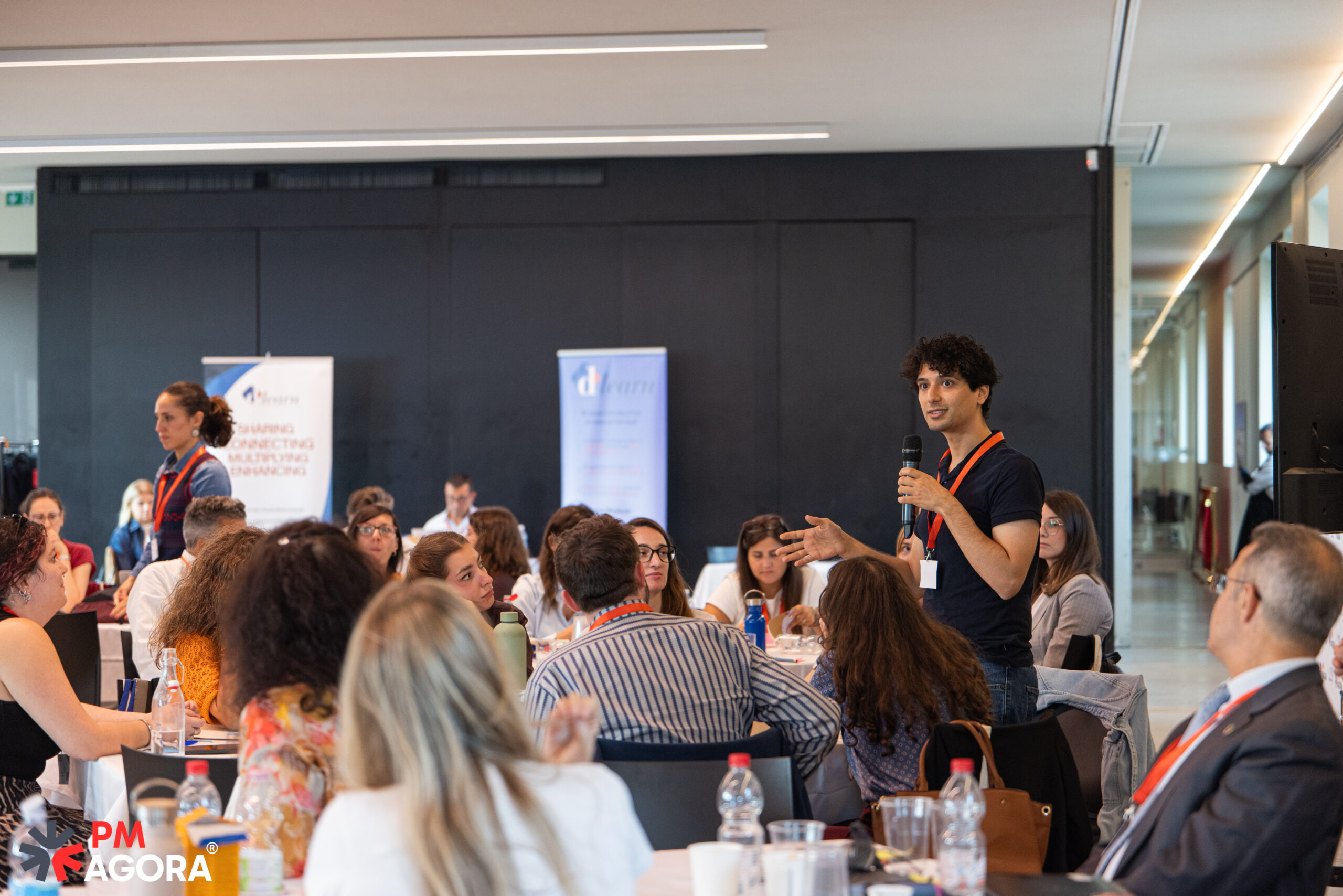
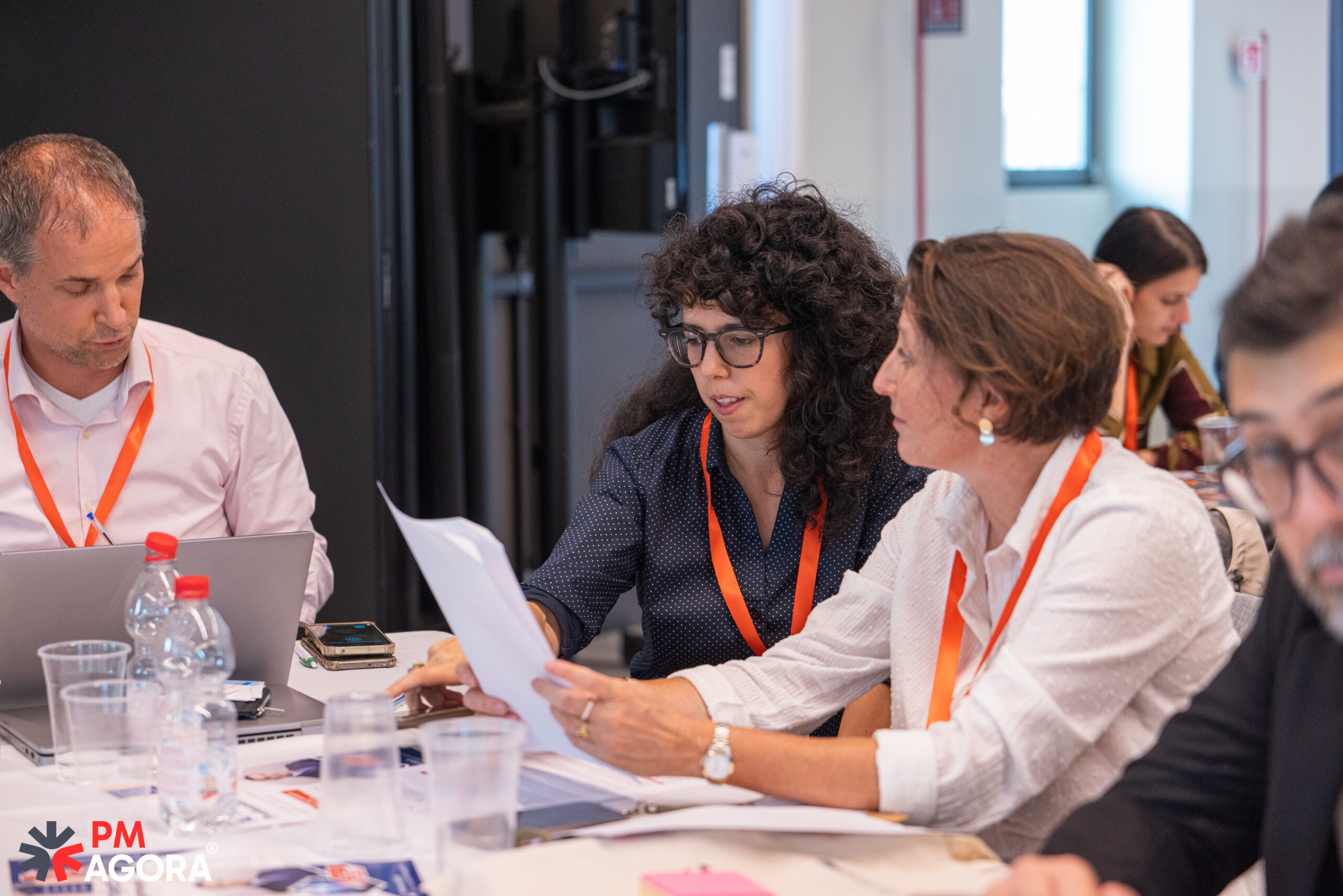
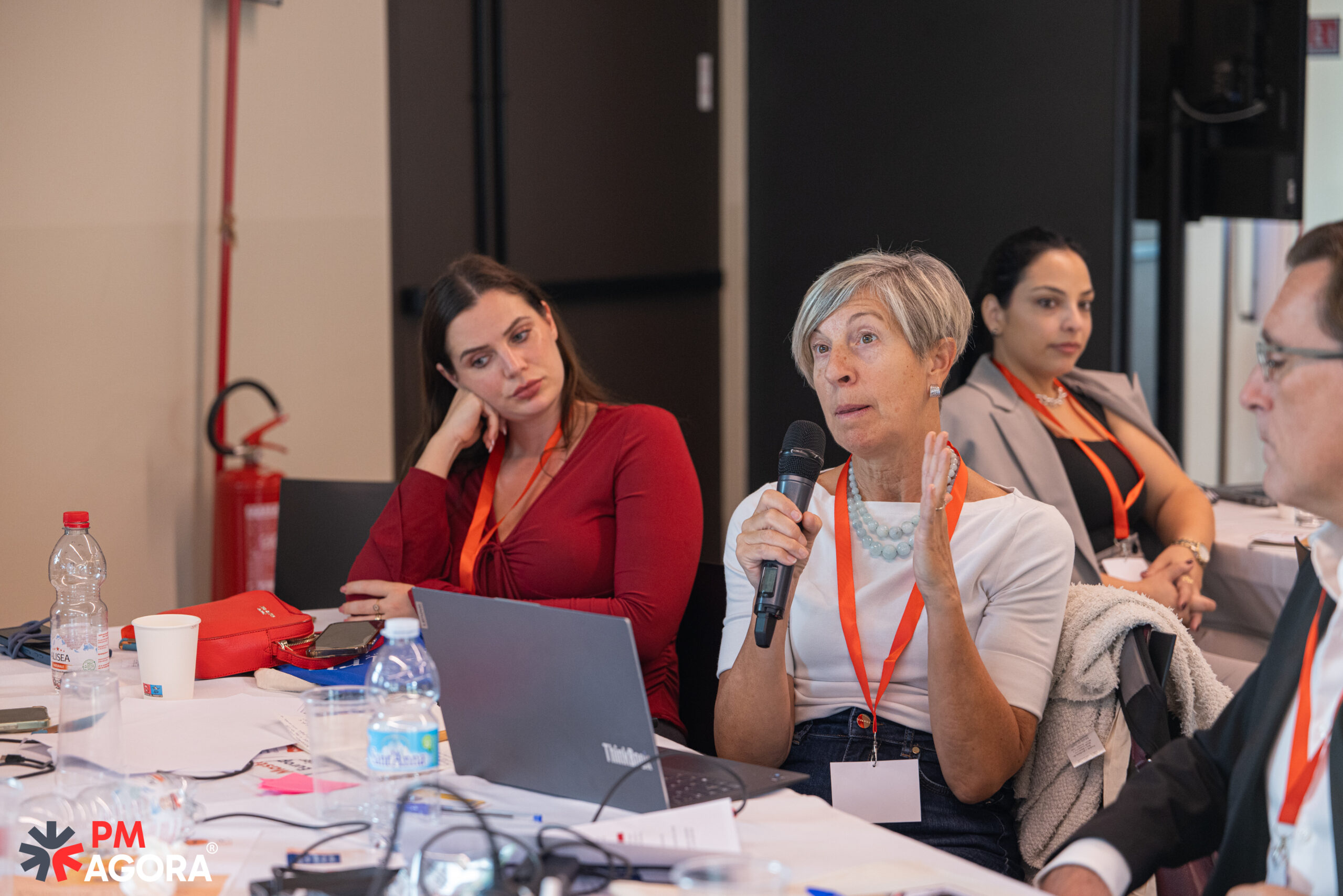
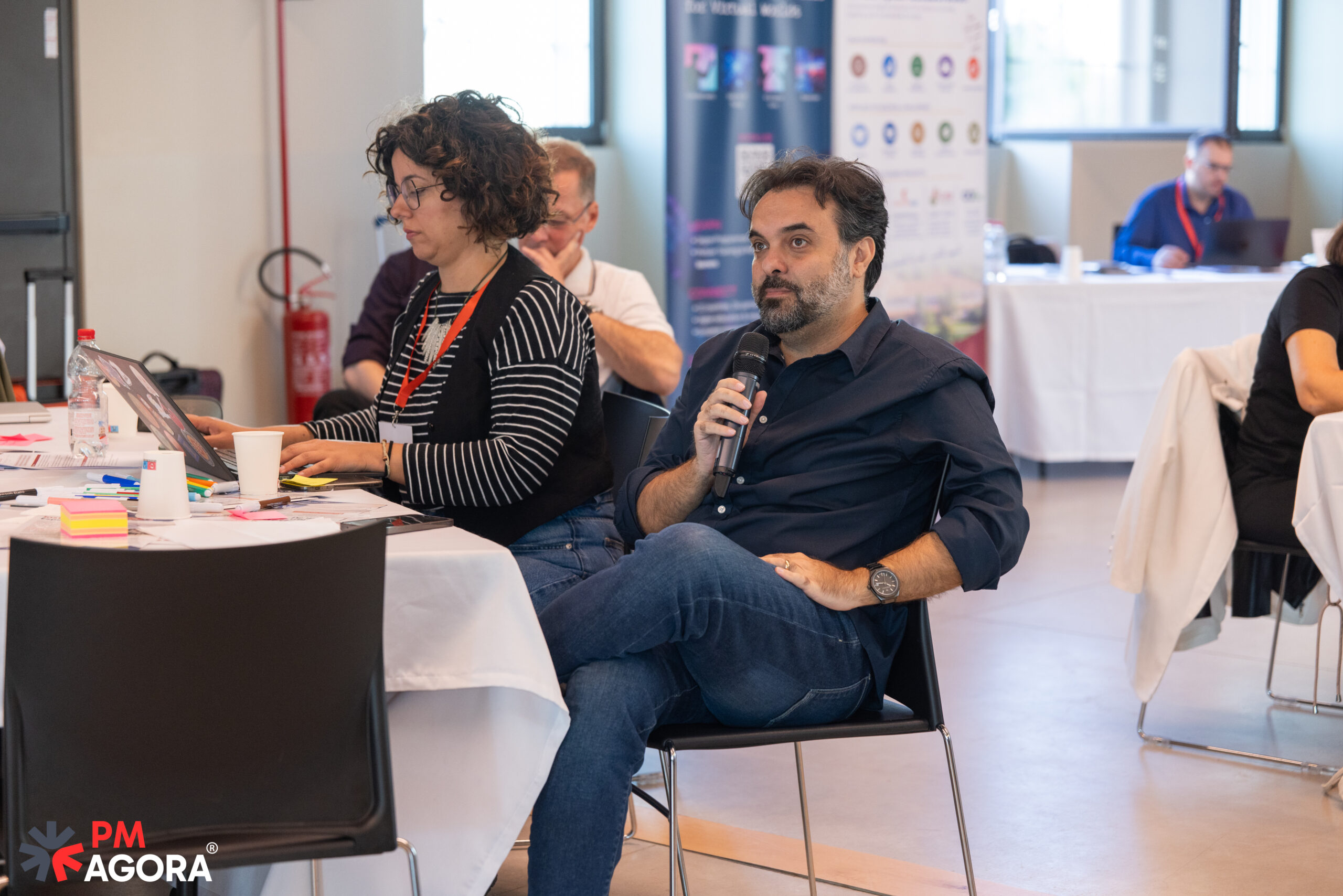
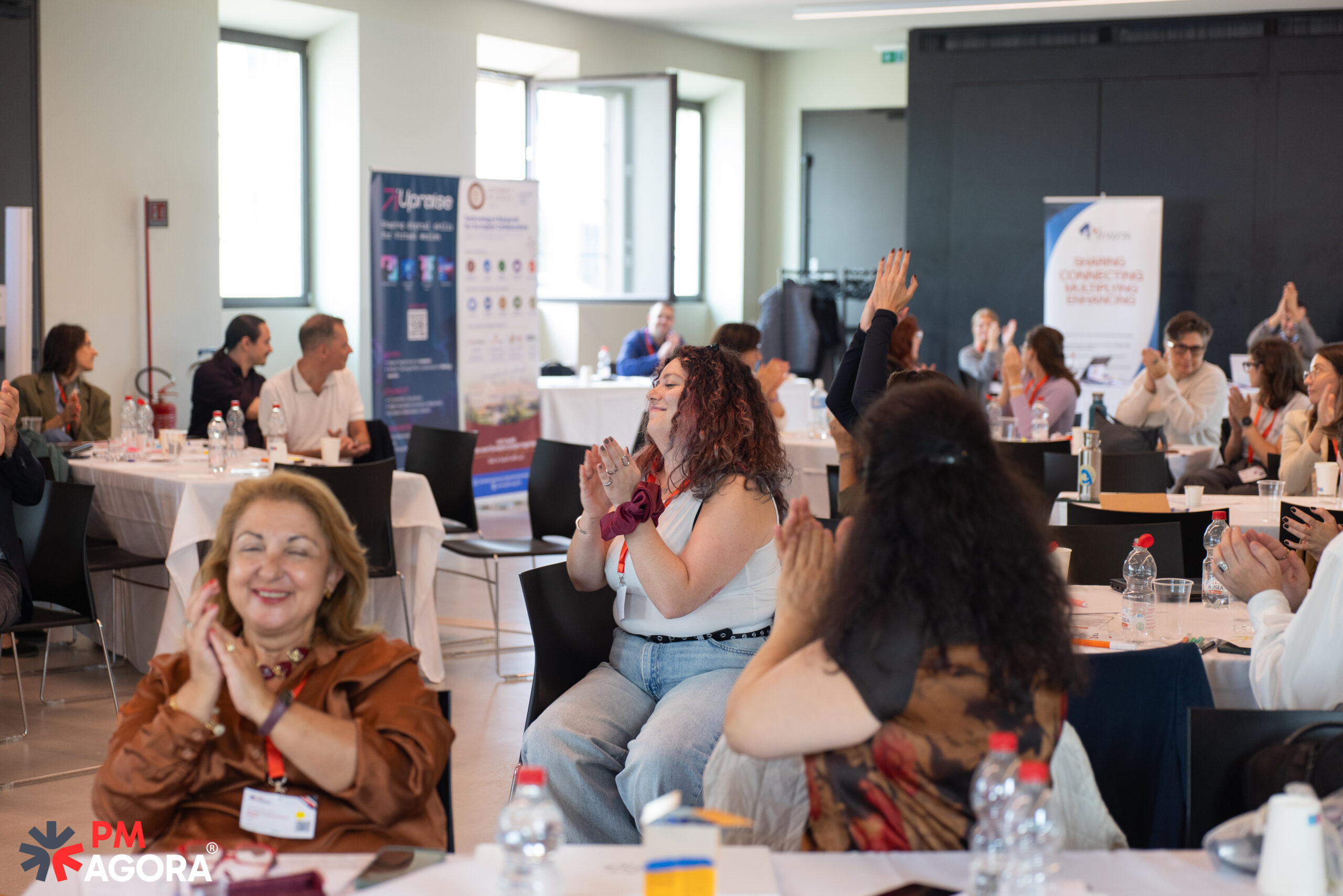
In Verona the draft was handed to the room to read, question and improve. Participants voted on what should be at the heart of the new organisation, imagined what it could have changed by 2029 and voted on a name. The coordinators were open about what is still unknown, from the legal form it could take to what it needs to represent project managers in Brussels. The next steps are to turn this input into the next version of the manifesto, set up the legal pathway and governance, and then open the doors to the wider PM community.
The new EU budget 2028-2034
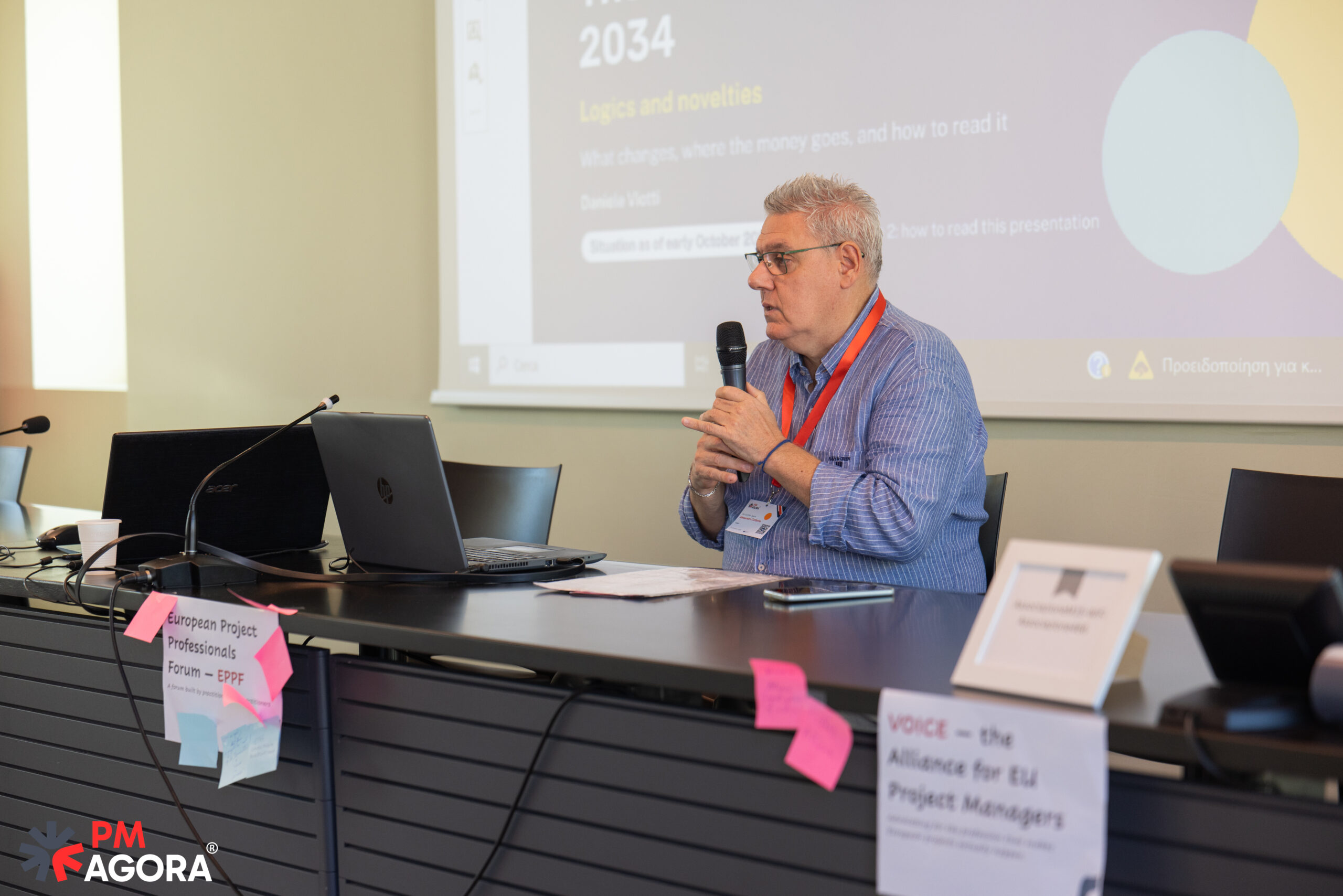
The second day began with the next Multiannual Financial Framework. We went through the extensive presentation of Daniele Viotti, former Member of the European Parliament, on the Commission’s proposal for the 2028-2034 budget, which changes the logic of EU funding. Many separate programmes are merged into fewer, larger ones, with simpler rules and a single approach to reporting.
The priorities shift as well. Funds for cohesion, agriculture and social policy are brought together in national and regional partnership plans, so more decisions move closer to Member States and regions. At the same time, competitiveness takes a central place, with more weight on defence and space, clean transition and digital leadership, and with Horizon Europe and Erasmus+ among the programmes that grow.
Participants discussed what this could mean for the EU funding ecosystem and for cohesion policy more broadly. More funding will sit closer to home, fewer and larger programmes will replace today’s funding lines, and private finance and loans will count alongside grants. The proposal is still under negotiation, with the legal texts expected to be settled in 2027, so the practical advice was to start now. That means learning how your Member State will build its plan and which of your current funding lines will map to the new programmes.
Completing the journey, from play to meaning
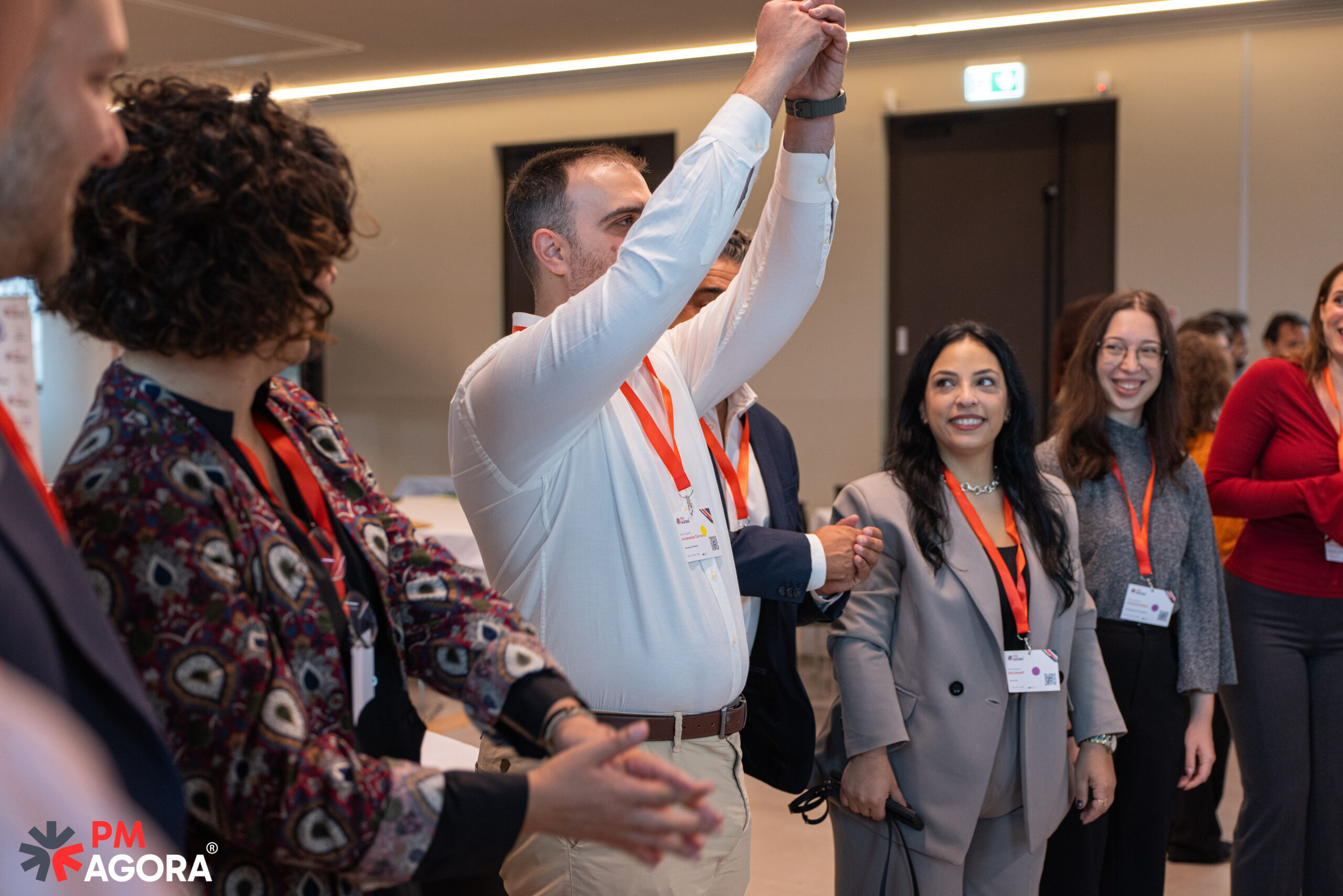
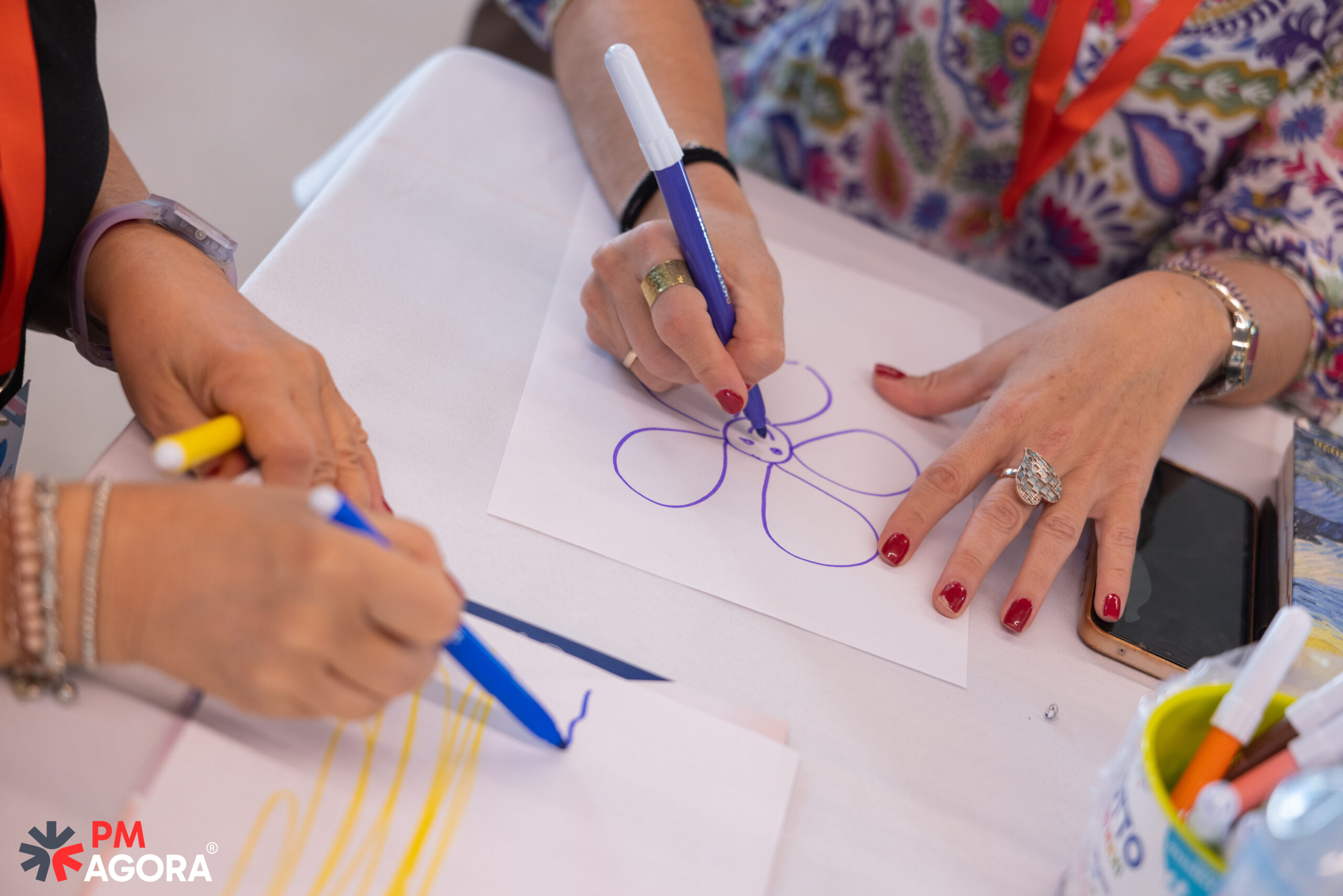
The last session was led by Helena Stamou and Aimilia Markouizou Gkika, and it explained what had been happening in the wellbeing check-ins over the two days. The exercises drew on psychodrama, expressive arts and movement-based methods, and each had a clear purpose. The warm-ups woke up the body and made it easier to let go of the fear of looking silly. Group exercises such as the crowded islands built cooperation and trust through shared movement. The peaceful place exercise offered grounding and a way to connect with an emotion without having to explain it, and the drawing exercise gave people room to settle, reflect and share what they were taking with them.
Together, the exercises moved the group from thinking to feeling and back to words, loosened the usual professional roles and turned a room of individuals into a team. Each exercise came with its scientific references, so participants could see the research behind what they had experienced.
Thank you
PM AGORA 2026 ended as it began, with people. Thank you to everyone who came to Verona, stepped away from your work for two days and gave your time, ideas and honesty to this community.
Thank you to our speakers, who shared their experience and answered our questions, and to the facilitators who reminded us to look after ourselves along the way.
PM AGORA exists because many organisations believe in it. We thank Glocal Factory, our local partner in Verona, and the European Commission Representation in Milan and the Municipality of Verona, who gave the event their patronage.
We thank our gold sponsors, the University of Patras, Centoform and the European Digital Learning Network (DLEARN), and our silver sponsors, Bantani Education and Climatica.
We also thank our community partners, Spithes, PORAKA NOVA, Women Do Business, DEEP Ecosystems, Europa Project Week, Startup Greece, the European Coworking Assembly, Think Loom, EUROMUNICIPAL, Thüringer Agentur für Europäische Programme e. V. and the FORS Project, who carried the word across Europe.
The conversations that started in Verona continue after the event. The manifesto, the new organisation and the connections you made are the work of the months ahead, and we will do it together. See you at the next PM AGORA.
Academy of Entrepreneurship
T-hap
InnoEUsphere