
Successful Completion of Erasmus Training Course “Are You Truly Entrepreneurial? AI-Powered Entrepreneurship, Digital Innovation & Social Impact”
From Ideas to Impact: Students Explore Social Entrepreneurship, Innovation and AI in Athens
Μπορείς να διαβάσεις την Ελληνική έκδοση αυτού του άρθρου εδώ.
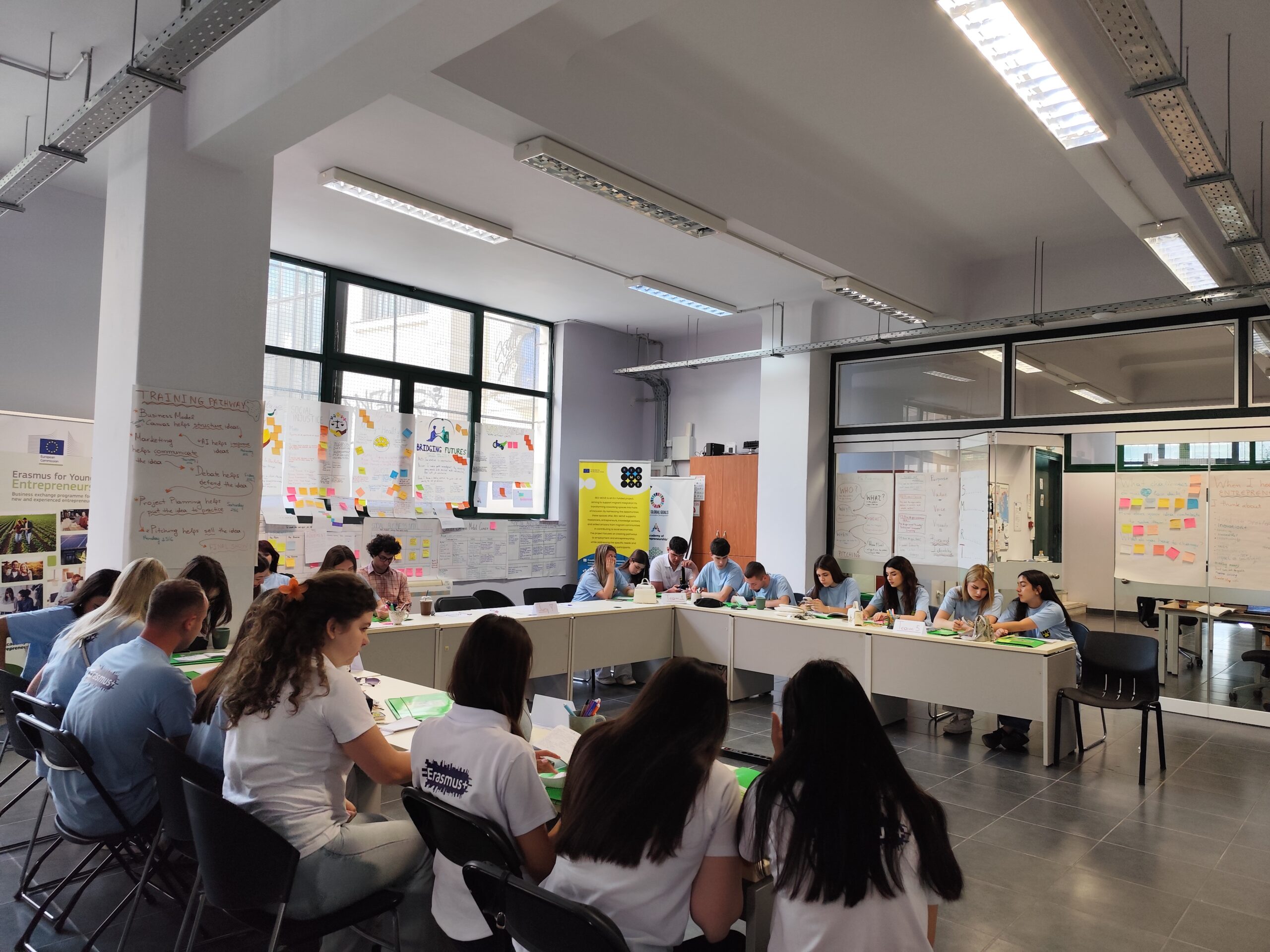
Students of Josif Josifovski VET High School in North Macedonia had the opportunity to participate in the training course “Are You Truly Entrepreneurial? AI-Powered Entrepreneurship, Digital Innovation & Social Impact” which just took place in Athens. The project was designed by the Academy of Entrepreneurship to introduce young people to social entrepreneurship, innovation, digital technologies and project development.
The learning objectives, set by our one and only Anastasia Zafeiropoulou, didn’t just aim at a theoretical understanding of entrepreneurship and business planning. To make the most of the experience, students were encouraged to arrive with an open mind, a project idea to explore, access to essential digital tools and a readiness to collaborate and participate fully. During the 9 days of the course, the project focused on achieving a deeper understanding by testing theory in practice, learning how to utilize practical tools and gaining an immersive experience of how social enterprises actually work.
Day 1 – Entrepreneurship, Creativity & Team Formation
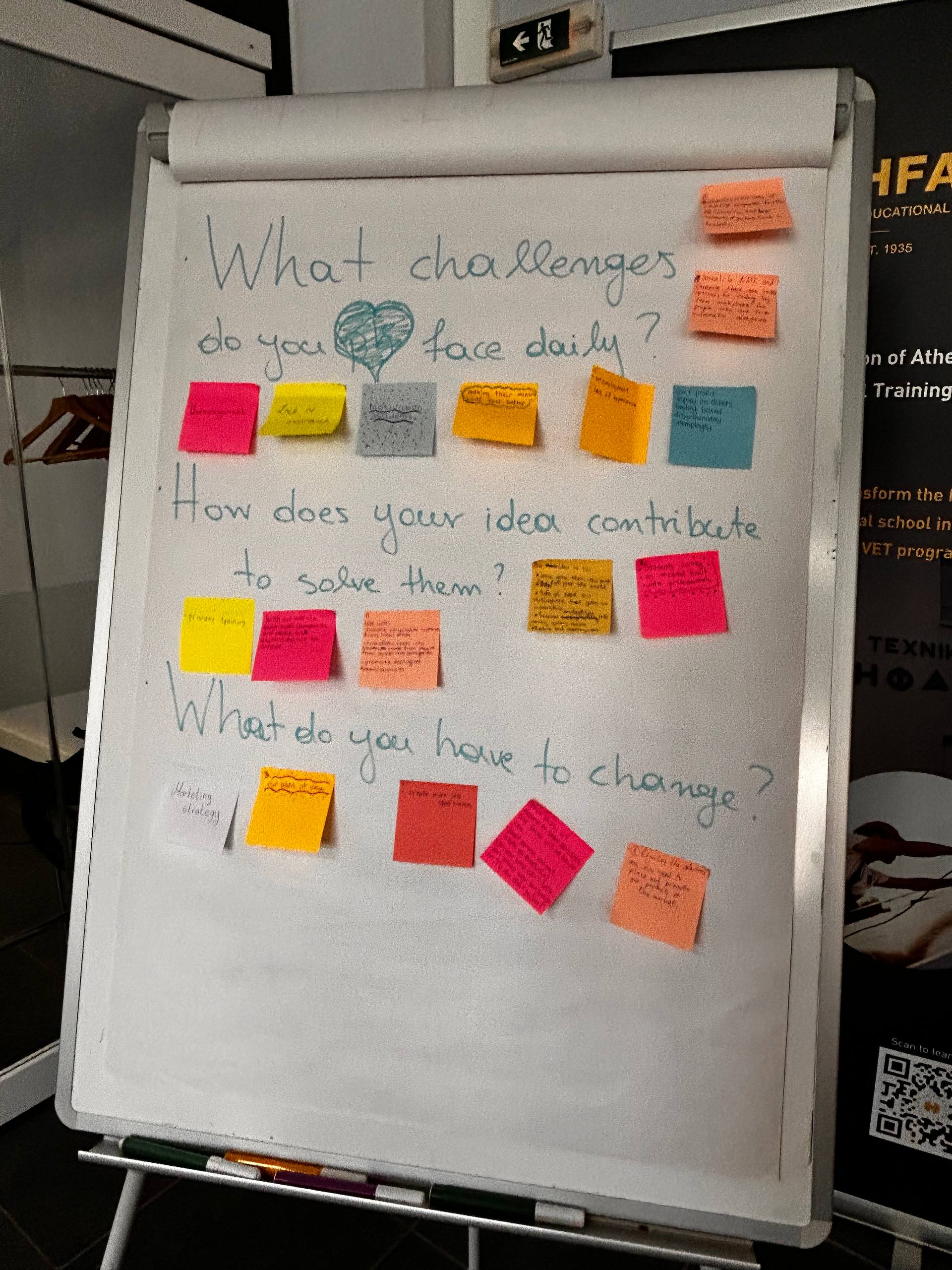
The training began with Anastasia Zafeiropoulou, EU Project Manager and Andreas Stefanidis, Social Entrepreneur and Adult Trainer, who introduced participants to the concepts of entrepreneurship, social innovation and social impact. Through interactive activities and discussions, students explored challenges affecting their communities and began forming teams to develop solutions that could create positive change.
Day 2 – Introduction to the Business Model Canvas & Funding
Building on their initial ideas, students explored the fundamentals of the Business Model Canvas and learned about funding opportunities for social enterprises. Through workshops led by Andreas Stefanidis and Anastasia Zafeiropoulou, they gained a better understanding of how social enterprises balance impact and sustainability while continuing to refine their project concepts.
Day 3 – AI for Entrepreneurship & Creative Problem Solving
Under the guidance of Anastasios Giannaros, ICT Expert, participants discovered how Artificial Intelligence can support entrepreneurship and innovation. Through practical exercises, they explored how AI tools can assist with research, brainstorming, decision-making and creative problem-solving while discussing the responsible use of emerging technologies.
Day 4 – Digital Marketing & Branding
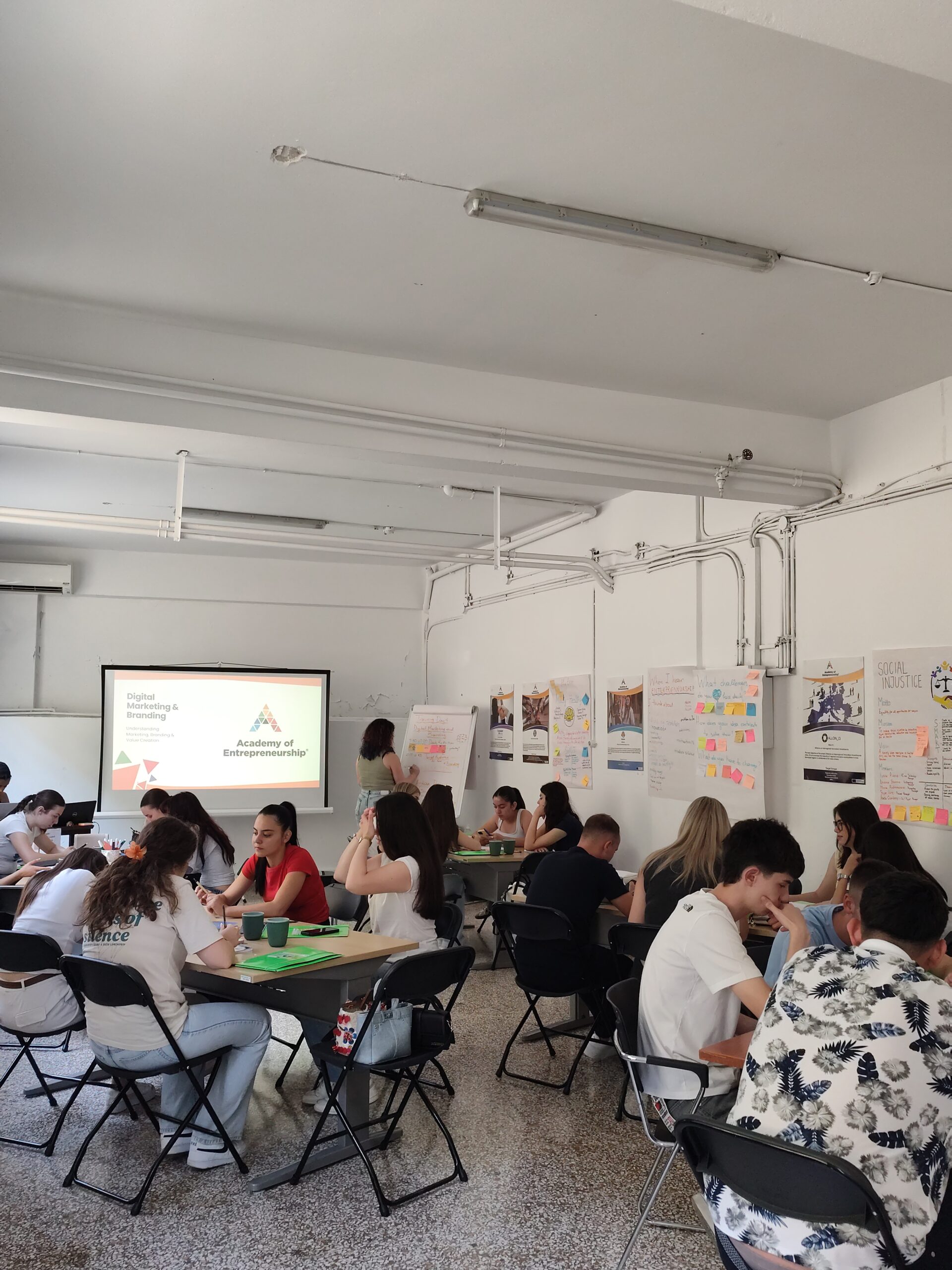
During sessions facilitated by Evi Papa, Communications Manager and Anastasia Zafeiropoulou, participants learned the importance of understanding target audiences, creating strong brand identities and communicating ideas effectively. Students explored how marketing can help social enterprises reach the people they aim to support and create lasting impact.
ANKAA Project – Example of an Active Social Enterprise
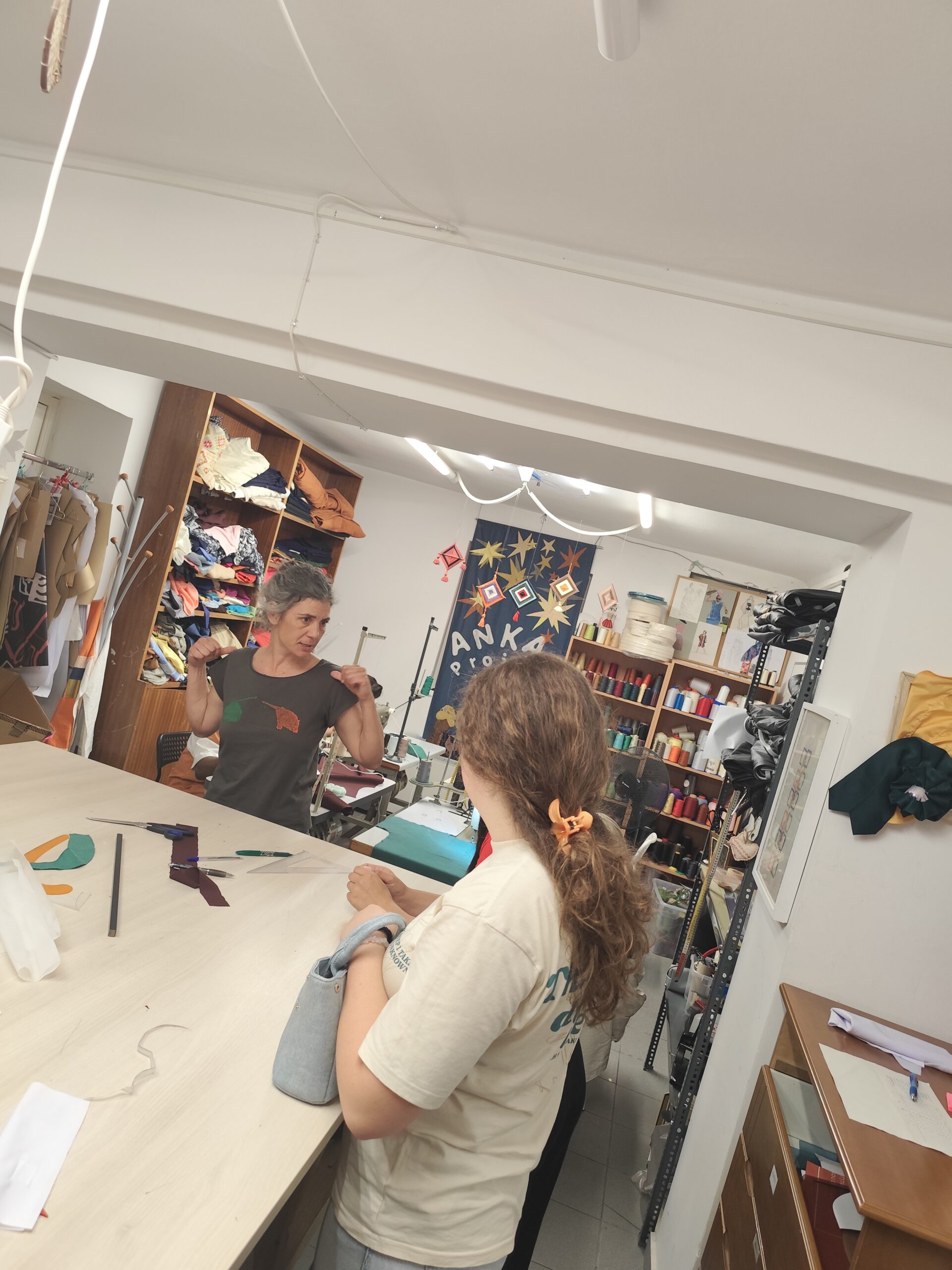
A highlight of the day was the visit to the ANKAA Project, where participants witnessed social entrepreneurship in practice. They learned how the organization supports women, immigrants and other vulnerable groups through training opportunities, skill development and language education. Students also discovered how ANKAA combines social impact with environmental sustainability by transforming recycled materials into products that generate income and support the continuation of its activities. The visit provided a valuable real-life example of how social enterprises can create meaningful change within their communities.

Day 5 – Business Model Canvas Workshop
With the support of Anastasia Zafeiropoulou and Nikolas Staikos, Debate Trainer, participants continued developing their projects through a practical Business Model Canvas workshop and debate activities. Teams worked on strengthening their ideas by identifying their target groups, value propositions, resources and sustainability strategies while learning to defend and refine their concepts through discussion.
Day 6 – Business Model Thinking & Project Planning
The sixth day focused on project planning, teamwork, timelines and risk management. Led by Alessandro Carbone, Senior Project Managment Consultant, participants explored how successful projects move from ideas to implementation and learned practical tools for organizing tasks, assigning responsibilities, and managing challenges throughout a project’s lifecycle.
Day 8 – Social Impact & Pitch Preparation
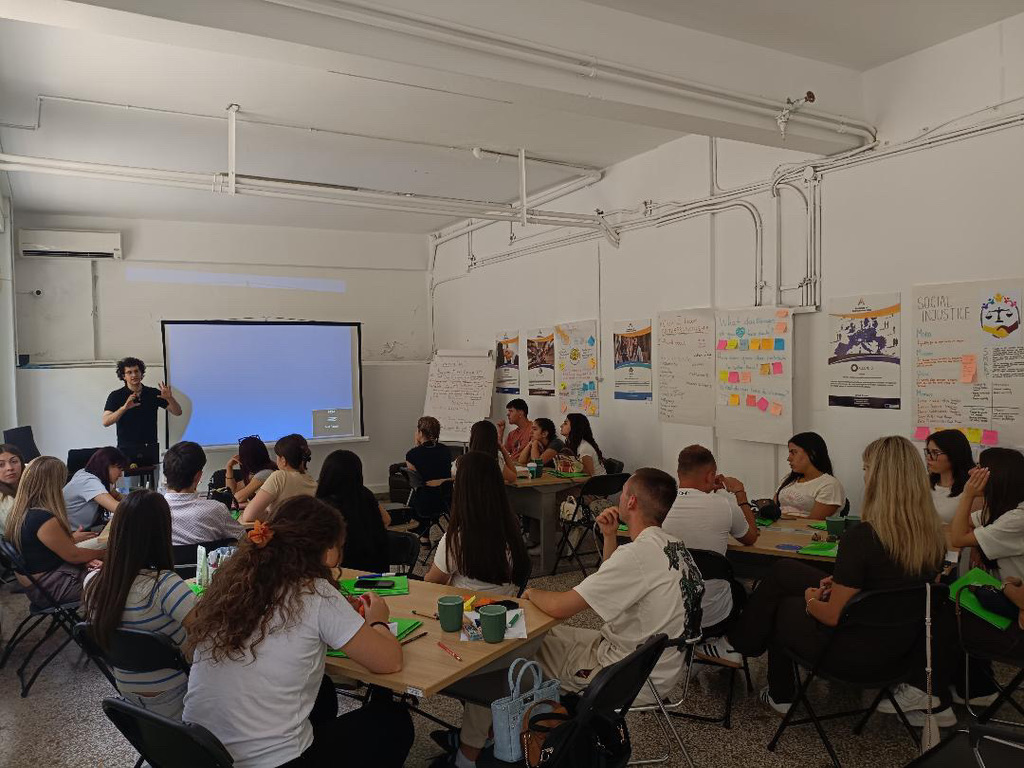
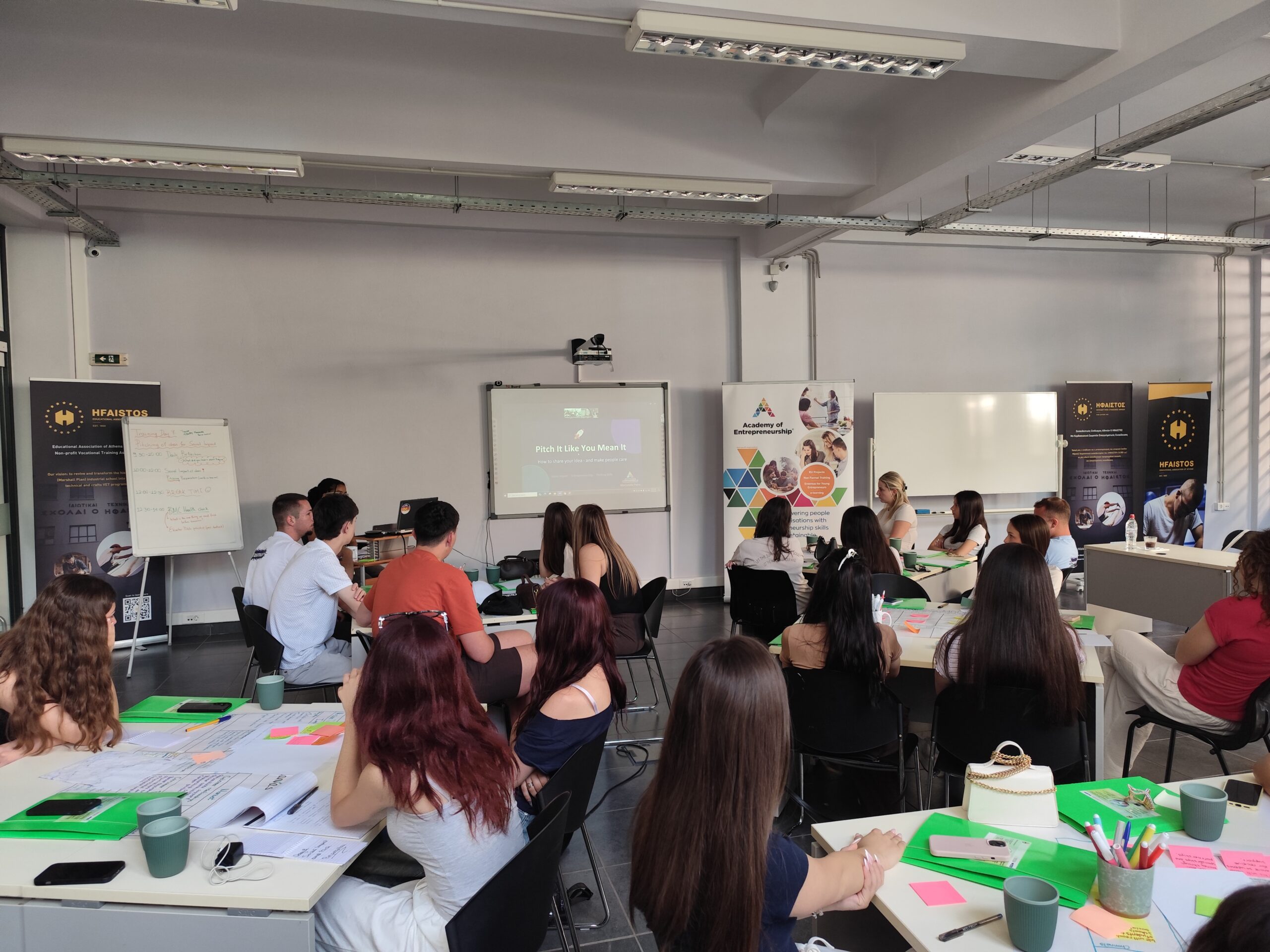
As the final presentations approached, participants worked closely with Marianella Parra, Director of Learning Design and Andreas Stefanidis to further develop their projects and strengthen their pitching skills. Through storytelling techniques and presentation exercises, students learned how to communicate their ideas clearly, confidently and persuasively.
Day 9 – Are You Truly Entrepreneurial? Final Contest
The program concluded with the final entrepreneurship contest, where participants presented the social enterprise ideas they had been developing throughout the week. Their projects reflected the knowledge, creativity and teamwork gained during the training and demonstrated their commitment to addressing real social challenges.
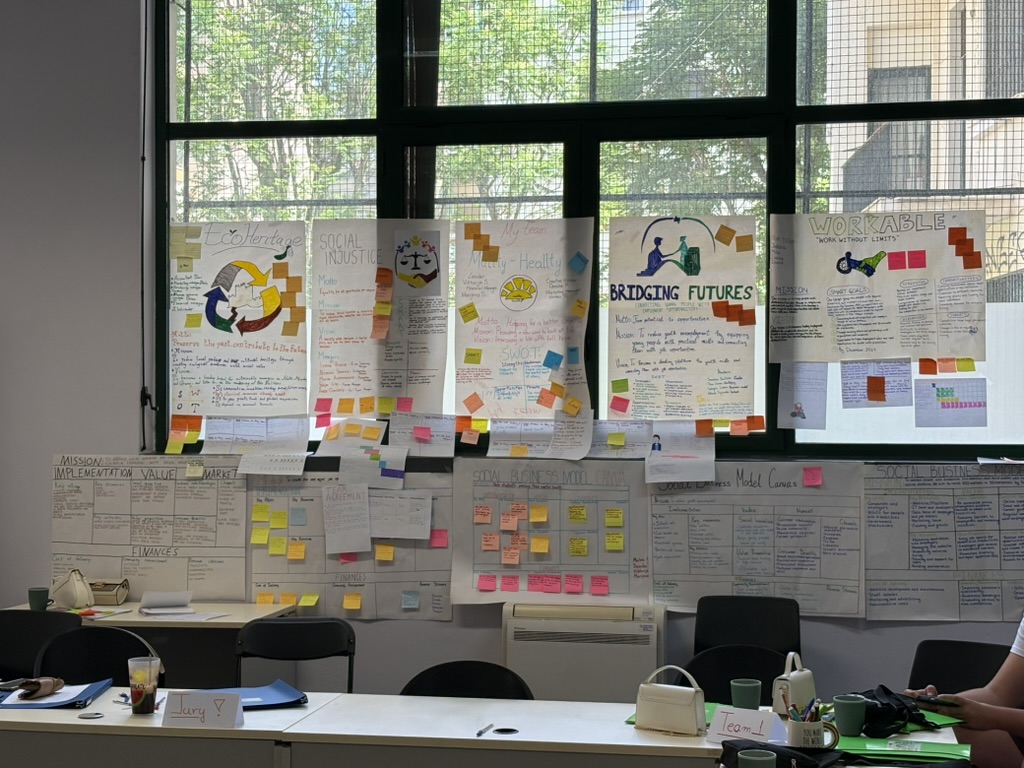
The five projects presented by the students included:
Eco Heritage – a social enterprise focused on sustainability, recycling and creating employment opportunities through eco-friendly products made from recycled materials.
Social Justice and Employment – a platform designed to connect individuals from marginalized groups with employment opportunities and promote equal access to the labour market.
WorkAble – an initiative supporting people with disabilities by improving access to employment and encouraging workplace inclusion.
Bridging Futures – a project helping young people gain experience, develop professional skills, and connect with future career opportunities.
Multy Health – a project addressing student mental health through awareness activities, education, and accessible support initiatives.
During the final contest, the projects were recognized for their achievements in different categories. Eco Heritage received the Entrepreneurship Award, WorkAble was recognized for Social Impact, Bridging Futures received the Communication Award, Multy Health received the Innovation Award and Social Justice and Employment received the Collaboration Award.
What Participants Gained from the Programme
Throughout the programme, students embraced every opportunity to learn, collaborate and challenge themselves. Through interactive workshops, teamwork, practical activities and intercultural exchange, they explored how creative ideas can be transformed into meaningful social ventures.
By the end of the training, participants had strengthened their communication, teamwork, presentation and problem-solving skills while gaining practical knowledge in entrepreneurship, project management, digital marketing and the use of Artificial Intelligence tools. Most importantly, they discovered that creating impact begins with recognizing community needs and having the courage to develop innovative solutions.
The programme was more than an introduction to entrepreneurship. It empowered young people to think creatively, act collaboratively and see themselves as future changemakers capable of making a positive difference in their communities.
Interested in organizing an Erasmus+ mobility in Greece?
The Academy of Entrepreneurship designs and delivers tailored training courses, study visits, workshops, and educational activities within the framework of Erasmus+ mobility projects for students, teachers, VET learners, youth workers, and professionals.
If your organization is interested in developing a customized learning experience, we would be happy to collaborate with you.
Contact us at: info@akep.eu
Follow us to stay tuned!